Prevention of terrorism act to be repealed – President
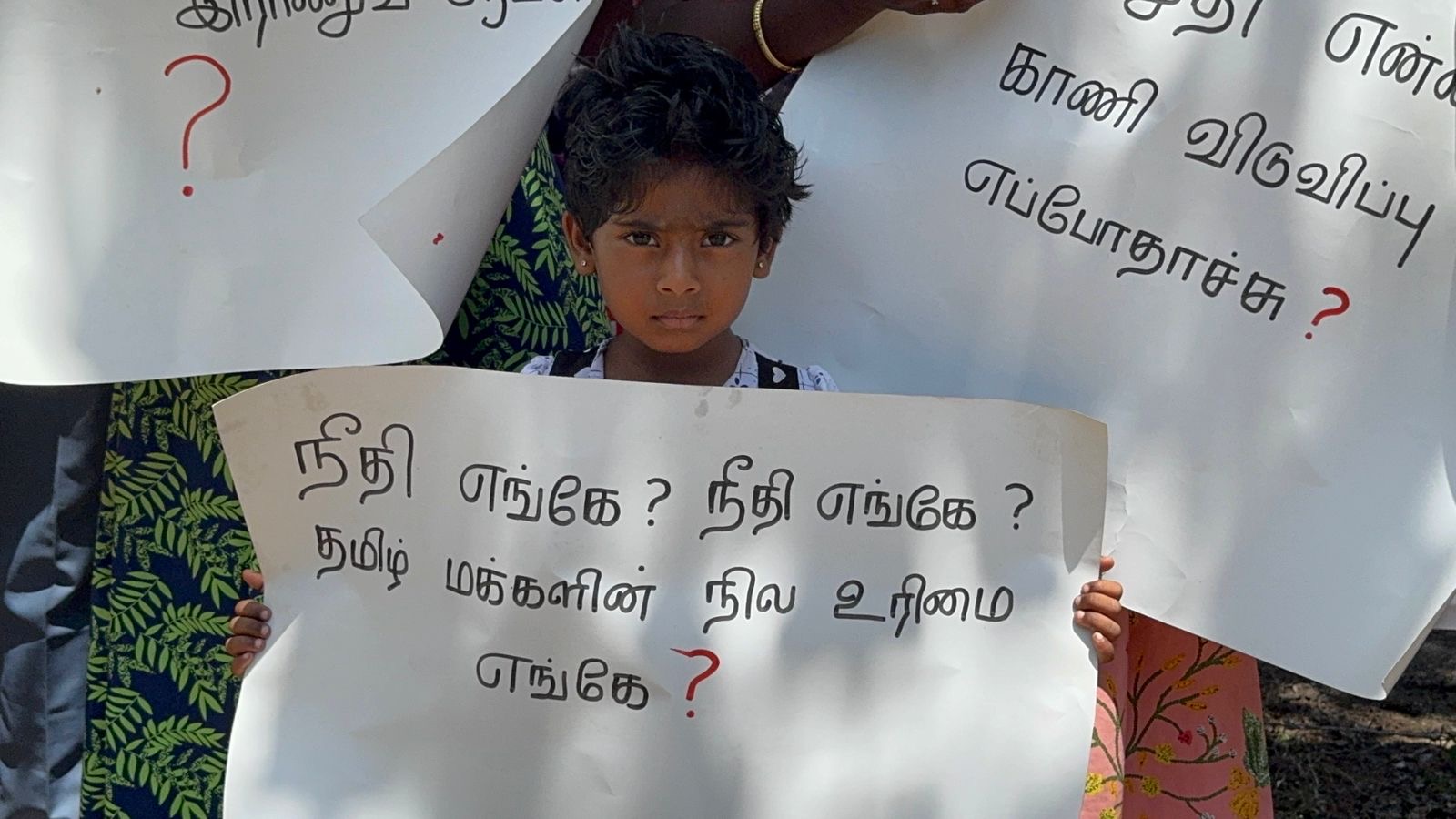
President Anura Kumara Dissanayake has announced that the Prevention of Terrorism Act (PTA) will be repealed within the next few months, bringing to an end a struggle that has continued for nearly 46 years.
Addressing Parliament today (25 June), the President stated that while this controversial legislation would be repealed, the Government would simultaneously establish a strong legal framework necessary to effectively combat and suppress organised crime within the country.
The full speech delivered by the President in Parliament today (25 June) is set out below.
The President emphasised that the punishment of those who had stolen public property and engaged in fraud and corruption had long been an aspiration of the Sri Lankan people, and that the current Government was one that was giving effect to that public expectation. He stressed that no crime would be allowed to be buried by the passage of time, and that the Government would fulfil its responsibility of bringing offenders before the law in the proper manner.
The President made these remarks while participating in the parliamentary adjournment debate on measures to combat the drug menace in Parliament this morning (25 June).
He further pointed out that the essence of the mandate given to the present Government by the people was the establishment of a civilised state. In this regard, he stated that there would be no personal revenge against anyone, and that the Government bore the responsibility of ensuring that everyone from the President down to the lowest level of political leadership, and from the Presidential Secretary down to the most junior public official became part of a civilised state.
The President also stated that the Government had already taken a series of strong measures to suppress drug trafficking and the armed criminal gangs associated with it, and that the country was now embarking on a long-term path of stability.
It gives me great pleasure to present several points regarding the proposals currently being debated in Parliament today on eradicating the drug menace and suppressing organised crime.
In our country, the drug menace and organised criminal gangs have been growing over a long period, causing widespread fear in society and significant social destruction. Therefore, the responsibility of all of us is to contribute towards eliminating the drug menace and suppressing organised crime.
We do not believe that the emergence and growth of drugs and organised criminal gangs is based solely on isolated factors. There are clearly established networks of connection behind them. Therefore, if we are to suppress drugs and organised crime, attention must be given to the entire system involved: organised criminal gangs, drug traffickers, corruption spread across state institutions and political authority, and the emergence of criminalised elements within the state itself, as well as organisations and political connections driven by political interests. This can only be addressed by suppressing all these elements. Accordingly, we have now decided that all of this must be dismantled.
I am aware that there is a large group engaged in this task. Unfortunately, that group has now become the primary target of the Opposition. Corruption, organised crime, drug traffickers, and crimes operating within the state apparatus must all be suppressed. There are laws in place for this. There are institutions in place. However, institutions alone are not enough. A state administrative mechanism capable of providing direct leadership to those institutions and defeating these threats is required. The very group committed to this task has now become the enemy of the Opposition.
In this effort, the Director of the Criminal Investigation Department, Deputy Inspector General Shani Abeysekera, is playing a major role. Today, he is regarded as an enemy by the Opposition. Similarly, the Director General of the Commission to Investigate Allegations of Bribery or Corruption, Mr Ranga Dissanayake, is playing a significant role, yet he too is now considered an enemy of the Opposition. Likewise, the Secretary to the Ministry of Public Security, Mr Ravi Seneviratne, the Minister Mr Ananda Wijepala, and Mr Dilipa Peiris of the Attorney General’s Department are making substantial contributions. Today, they too have become enemies of the Opposition. The judiciary is also playing a major role, and even the judiciary has now become an enemy of the Opposition.
Why is this so? Because the establishment of justice, fairness and civility has become something that certain sections of the Opposition are unable to tolerate. They are no longer able to accommodate democracy or good governance. If crimes have been committed within the state while enjoying state patronage, should those crimes not be exposed? Is that betrayal of the country? Is that treason? No, it is the intention of building a civilised country.
Our state must be transformed into a civilised state. From the President to the lowest level of political leadership, and from the Presidential Secretary to the lowest public official, everyone must become part of this civilised state.
We have respect, appreciation and deep gratitude for our armed forces and intelligence services. However, if at any point members of the armed forces or intelligence services engaged in state security work or public protection are subjected to oppression, we will stand up for them. If the armed forces and intelligence services have acted domestically or internationally in defence of the state and the safety of the people, we are bound to protect and honour them. We will do so. However, if a very small section within those forces has acted in pursuit of political or familial interests, the Government will not hesitate to ensure that they are duly punished.
This must be done for the sake of our armed forces, for the establishment of a civilised state, and for the protection of the people of our country.
How was the assassination of Lasantha Wickrematunge carried out? This was not an ordinary civilian conflict. A journalist opposed to the Government was murdered, and there are reports that intelligence services were involved. Should this be concealed? Keith Noyahr was abducted and assaulted. He was reportedly held in a military safe house. Upali Tennakoon was attacked. Poddala Jayantha was assaulted. Namal was attacked. These were not civil conflicts, but crimes committed in pursuit of power for a family and a political faction. The same applies to the murder of Thajudeen and the Easter Sunday attacks. In addition, Sirasa was set on fire, the Irudina office was set on fire, and Siyatha was bombed. There is such a history. Behind all this stood a small section of operatives within the state machinery. Is it not necessary to reveal this to the country? Was there not a fear of white vans? Were people not abducted in unmarked white vans? These were not ordinary civilian conflicts. A very small group within the state security apparatus, acting on political interests, carried out these brutal killings and crimes. We are firmly committed to ensuring that justice is carried out for these crimes.
We must do this for the sake of the victims, for the honour of the armed forces, and for the civility of the state. Who can oppose this? Only criminals can oppose it those who have benefited from crime or consolidated power through it. No other citizen who respects democracy, human rights and humanity can oppose these investigations.
Today, there are significant attacks being made against Shani Abeysekera, Ranga Dissanayake, the police, and the judiciary. What is their crime? Their “crime” is exposing and investigating crimes committed against the people of this country. They are not guilty. If anyone believes that this process can be stopped by threatening or intimidating individual officials, I assure you that we will not allow it. We stand by this process. We stand with the people, not with criminals. I invite everyone to support this effort.
There was also a political dimension to this. Payments were allegedly made to prevent criminals from being killed. When someone was arrested, the proper procedure was to present them before a court. However, money was taken to kill them instead of producing them in court, and money was taken to “save them from death”. There was no distinction between political parties in these matters. It was believed that these issues would be buried by the passage of time. We will not allow that. It is the responsibility of the state to bring criminals before the law. Investigations will be conducted, arrests made, and cases filed by the Attorney General’s Department, followed by punishment through the judicial system.
However, there was also a history of detainees being killed after arrest. There was also a history of taking ransom money to prevent killings. The details of the group arrested this morning will soon be revealed. I do not know whether your parties are harbouring such individuals. There is also a political leader who has spoken 92 times with imprisoned drug traffickers, 54 of those calls initiated by him. I am not aware whether disciplinary inquiries have been conducted within the party regarding this.
The political establishment has contributed to the growth of drug trafficking and organised crime. We are completely ending the protection given by the political establishment to these activities. The people gave us a strong mandate, and within that mandate lies the transformation of the state into a civilised one.
Parliament must be civilised. It must listen and report facts. Do the people of this century expect such a Parliament? Strong leadership is required for civility. Your Members of Parliament must be civilised. We must bring civility back to this country. We are engaged in this struggle to bring civility into Parliament, state institutions, and all spheres of governance.
Corruption has been a long-standing topic in our electoral platforms. Since 2023, nearly one billion US dollars has been paid in TT transfers and advance payments, yet goods have not been delivered. Such money cannot be moved by ordinary individuals. This includes drug money, corruption proceeds, and illicit wealth derived from crime. Investigations are underway.
This has been happening for over two years. We have introduced regulations to prevent it. We have identified banking links and several bank branches. This corrupt wealth is being transferred out of the country in the form of foreign currency, undermining the economy and social fabric. Should this not be investigated? We have no intention of personal revenge or settling personal scores.
Nearly two years have passed since we came into power. If this were revenge, it would have happened immediately upon gaining power. This is not revenge. We have enacted strong legislation through Parliament to combat corruption and bribery, established investigative institutions, strengthened weakened agencies, recruited new staff to the Attorney General’s Department, and established new High Courts to expedite judicial proceedings. Our objective is swift justice through the courts.
The people had a long-standing expectation that those who stole public property would be punished. This was not a partisan demand but a collective public aspiration. Therefore, this Government is giving effect to that aspiration.
Since our Government came into power, large quantities of narcotics have been seized. Enforcement operations have been strengthened. Drug trafficking via airports, ports and postal routes has been identified. Arrests are being made without discrimination—from underworld figures to respected individuals. We have arrested and repatriated 23 individuals with red warrants, and a further 35 individuals involved in drug trafficking have been brought back to Sri Lanka.
We are also aware that crimes were being coordinated from prisons. We have established a new high-security prison in Welisara, where prisoners receive proper facilities but external communications are completely blocked. Leading criminals are being transferred there. Communication networks within prisons have now been significantly disrupted, weakening the ability of organised crime groups to operate from within prison.
We do not believe that dismantling drug trafficking and organised crime can be achieved in a few months or even a year. However, we have implemented long-term, stable and strict measures.
We assure you that organised criminal gangs, the underworld, and drug networks will be completely eradicated from Sri Lanka. We are not carrying out these actions in a manner that undermines democracy. Citizens have the right to criticise the Government. We do not want a society that lives in fear of rulers. We want a system where rulers are constantly questioned and held accountable. That is the nature of a civilised society.
We are a political movement committed to expanding democratic space at all times.
For a long time, there have been calls to repeal the Prevention of Terrorism Act. I am pleased to state that this Act will be repealed this year. Final discussions have already been held, and it will be repealed very soon. However, we are aware that there is currently a threat from organised crime. Therefore, a strong legal framework will be introduced to deal specifically with organised crime.
Terrorism can be interpreted in many ways, and under the PTA charges can be brought under broad interpretations. It contains a wide scope for interpretation. However, we will define organised crime precisely and introduce a specific legal framework for it. We will also ensure that fundamental rights, including freedom of expression and democracy, are fully protected through amendments.
A new law targeting organised crime will be introduced with a clear and precise definition focused specifically on criminal organisations.
A lengthy debate was also held in Parliament when the Online Safety Act was passed. We opposed it. Amendments were later introduced. The Act was passed in Parliament, and the following week the Cabinet amended it. That is how things were done previously. We are not fully implementing the Online Safety Act in its current form; we are amending it comprehensively. A new proposal was recently approved by the Cabinet.
These were laws that violated people’s rights. We are abolishing them. Not only that, but during protests, not a single water cannon has been used against the public under our administration. Tear gas has not been used against peaceful public protests. There was an incident in Matara involving a prison disturbance where tear gas was used strictly within the prison premises. However, this is the only period in history where tear gas has not been used against public protests.
There is also a history where water cannons were not used against protesters. We are a democratic Government. We want an empowered state. If we do not build it, no one else will. People must have the right to question rulers and enjoy freedom and rights. A country can progress only when citizens are granted democratic rights.
We are a Government that respects democracy and human rights. In the past, journalists were threatened and media institutions attacked. That is no longer the case. However, citizens who enjoy democratic rights must also develop a sense of civility.
Some political groups are not accustomed to functioning in a free democratic space. They were used to fear and submission. Therefore, they struggle to express opinions or engage in political struggle in a free environment.
Bringing protests to the doorstep of the Secretary to the Ministry of Finance is not acceptable. Protests should be held in front of the Ministry or Parliament. That is democratic. Going to a private residence is not civilised behaviour.
There is a small group that does not understand how to exercise freedom in a democratic society. How do you maintain civility in slogans and protests? How do you define the limits of freedom within a democratic society? There is no understanding of this.
We know that when the ceremonial mace is raised in Parliament, the Opposition sometimes storms the House, and historically the Government would also respond. This time, however, that did not happen. The public now sees such behaviour as uncivilised rather than heroic.
At some point, we must reach that level of civility. I believe Parliament is the best place for that transformation. We have already taken long-term, stable steps towards transforming this country.
There has also been debate regarding the judiciary. I consulted the Chief Justice regarding the appointment of Supreme Court judges, and received a detailed explanation. We are not considering isolated retirements but the functioning of the entire judicial system.
Several Magistrate Courts are currently closed. The Attorney General has requested a three-judge High Court, but there are insufficient judges. Some existing High Courts are overburdened. Therefore, recruitment at lower levels must be strengthened. Approval has been granted to recruit 50 new magistrates, and interviews are currently ongoing, with 33 already selected. Further appointments will depend on capacity needs.
We must ensure the system functions without collapse. Therefore, the decision regarding Supreme Court appointments must consider the stability of lower courts. Some additional Magistrate Courts have had to be closed temporarily due to shortages. The Chief Justice has provided a detailed explanation on this matter.
Targets for judicial appointments have also been outlined. Vacancies in higher courts can be filled within a short period. However, it is unacceptable to suggest that judges are being influenced by inducements such as “carrots” to deliver verdicts. Such statements are a grave insult to the judiciary and must not be made.
We are working to ensure justice is delivered fairly to victims. We have no intention of controlling the judiciary, the media, or protests. The media has always been divided, and journalists have the right to criticise, question, and expose government mistakes.
We believe that they will eventually understand the standards of civility required in a democratic society. We do not intend to “teach” them, but they will learn in time, as they must understand their place in society. If the media remains in outdated patterns while society progresses, it will lose its relevance.
Therefore, while protecting democracy and combating drugs and crime, we aim to transform the country into a civilised state and society. We hope to receive the support of all in this endeavour.
மேலும் படிக்க »
இந்த செய்தியைப் பற்றிய கருத்தை பதிவு செய்யுங்கள். மேலும் இந்த செய்தியை உங்கள் நண்பர்களுடன் பகிர்ந்து கொள்ளுங்கள்.