UN experts demand accountability 20 years after Muttur massacre
UN experts demand accountability 20 years after Muttur massacre by Thusiyan
United Nations experts have demanded truth, justice and reparation for the families of 17 humanitarian workers executed at Muttur two decades ago, warning that the enduring impunity has prolonged the suffering of relatives and undermined confidence in the rule of law.
In a statement issued in Geneva on 4 August, the twentieth anniversary of the killings, four special rapporteurs recalled that the staff of Action Contre la Faim were found executed at their compound in the Trincomalee district town, most of them with gunshot wounds to the head, at a time when the organisation was the only international NGO still providing water, sanitation and hygiene services to the local population.
"The victims were not combatants. They were humanitarian workers providing life-saving assistance to civilians caught in armed conflict," the experts said. "Their killing was not only a devastating attack on humanitarian personnel but also undermined the delivery of essential assistance to conflict-affected communities."
The experts recalled that successive international investigations, including the OHCHR Investigation on Sri Lanka published in 2015, concluded that there are reasonable grounds to believe members of the security forces were responsible. Domestic commissions of inquiry, by contrast, were marred by evidentiary failures, inadequate witness protection and political interference, culminating in the withdrawal in 2008 of the International Independent Group of Eminent Persons overseeing the process, which cited a lack of political will to pursue accountability.
"Nearly 20 years later, those responsible have still not been arrested, prosecuted or punished," they said. "This enduring impunity has prolonged the suffering of victims families and undermined confidence in the rule of law."
The killings, the experts said, had direct and foreseeable consequences for more than 325,000 highly vulnerable displaced people in the area, as the disruption of well rehabilitation programmes, the Kantalai water treatment plant, food distribution and agricultural support increased exposure to unsafe drinking water, malnutrition and water-borne diseases at a moment when aid was indispensable for survival. More than 2,000 aid workers left the Northern and Eastern Provinces in the months that followed, with humanitarian space continuing to shrink until the end of the conflict in 2009.
"The victims families have endured two decades of waiting, threats and displacement, without answers or effective remedy. Their suffering may amount to cruel, inhuman or degrading treatment in itself," the experts said.
They warned that the failure to punish attacks on aid workers carried consequences far beyond Sri Lanka, noting that 2025 was the deadliest year on record for humanitarian personnel worldwide, with more than 1,000 killed between 2023 and 2025.
"We urge the Government of Sri Lanka to immediately open, or reactivate, a prompt, independent, impartial and effective investigation into the Muttur massacre, provide comprehensive reparation to the victims families, and guarantee the protection of all those wishing to mark the 20th anniversary."
The statement was issued by Morris Tidball-Binz, Special Rapporteur on extrajudicial, summary or arbitrary executions; Margaret Satterthwaite, Special Rapporteur on the independence of judges and lawyers; Pau Pérez Sales, Special Rapporteur on torture; and Bernard Duhaime, Special Rapporteur on the promotion of truth, justice, reparation and guarantees of non-recurrence. The experts said they were in contact with the Sri Lankan government on the matter.
Twenty years is far too long
Amnesty International issued its own call, saying justice for the massacre could not wait after two decades of impunity.
"Twenty years is far too long for families to wait for justice. For two decades, those who lost their loved ones have carried the burden of grief while the Sri Lankan authorities have failed to deliver accountability," said Babu Ram Pant, Amnesty Internationals Deputy Regional Director for South Asia.
"The twentieth anniversary must not become another milestone marked only by remembrance. It should mark the moment when the authorities finally demonstrate that no one is above the law and that crimes under international law and serious human rights violations will no longer be met with impunity."
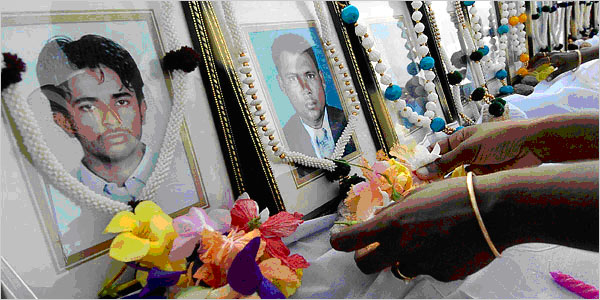
Amnesty noted that the ACF employees had remained in Muttur to assist communities affected by the armed conflict and the 2004 Indian Ocean tsunami despite escalating hostilities. In 2008, the organisation itself observed that the investigations established at the time had "little or no chance of establishing officially the persons criminally responsible for this war crime (direct perpetrators and chain of command)" and that they had "proved ineffective and unproductive". ACF subsequently ended its mission in Sri Lanka and called for an international investigation.
Ending impunity for the massacre, Amnesty said, was essential not only for the victims families but for restoring confidence in Sri Lankas justice system and signalling a decisive break from the longstanding impunity for crimes under international law.
The interventions follow a piece by Human Rights Watchs legal and policy director James Ross, who was in Sri Lanka when the killings took place and wrote that 20 years on he still could not report that those responsible had been held to account.
மேலும் படிக்க »
இந்த செய்தியைப் பற்றிய கருத்தை பதிவு செய்யுங்கள். மேலும் இந்த செய்தியை உங்கள் நண்பர்களுடன் பகிர்ந்து கொள்ளுங்கள்.