Sri Lankan police strip water and toilets from Tamil land protesters
Sri Lankan police strip water and toilets from Tamil land protesters by abilash
Tamil landowners campaigning for the return of their military-occupied land in Valikamam North entered a sixth consecutive week of demonstrations on Sunday, after Sri Lankan police removed the drinking water and sanitation facilities used by protesters, many of them elderly, deepening concern over the treatment of civilians displaced from their homes for more than three decades.
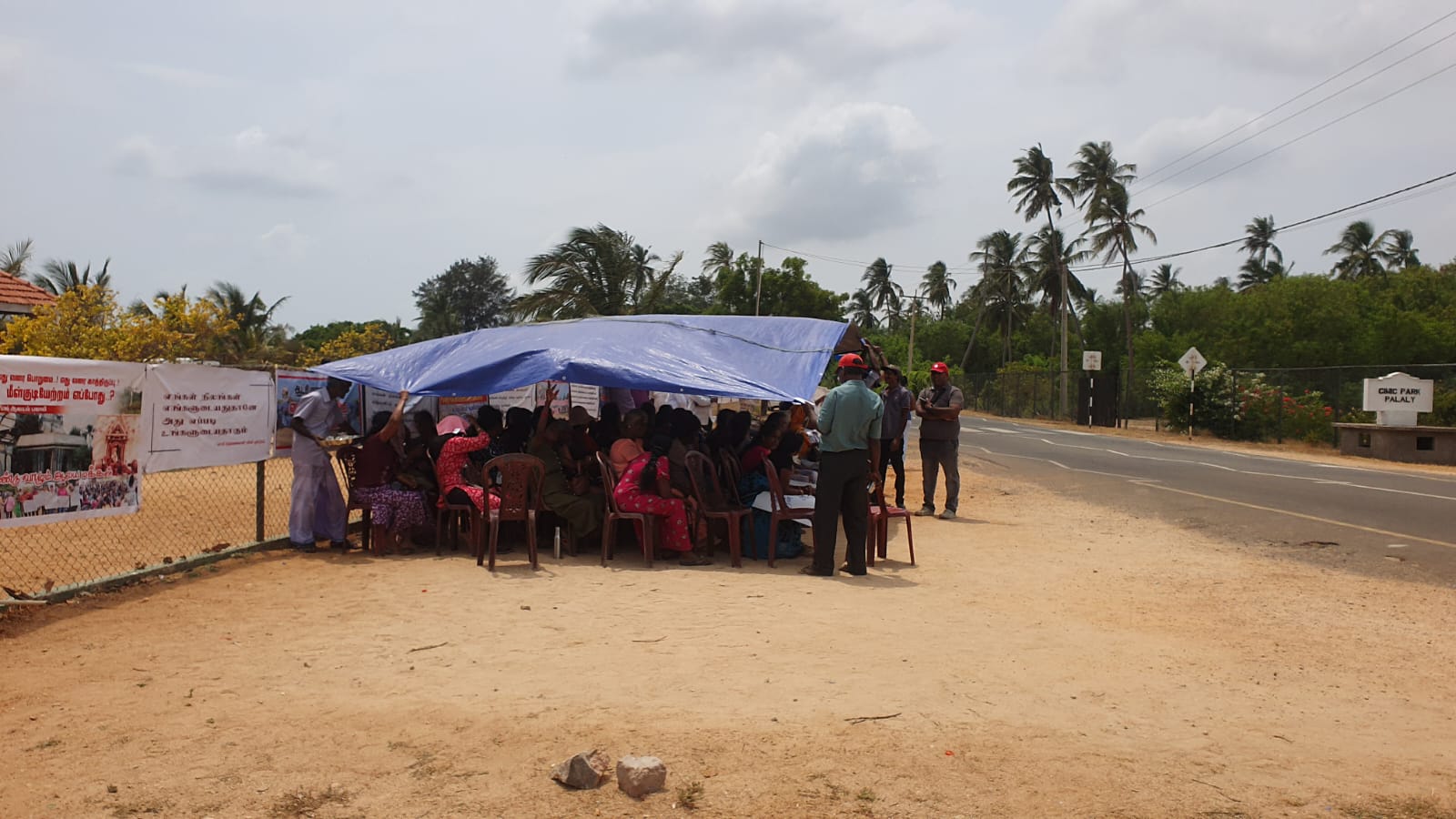
The weekly protest at Palaly Junction has become a focal point for residents denied access to their lands for 36 years, who are demanding that the Sri Lankan military relinquish their privately owned property, which remains under heavy occupation.
Protesters say that while they live without access to their homes and livelihoods, the military has been using their lands for agricultural production, commercial activities, leisure facilities and other business ventures serving its own interests.
Sundays demonstration took place under increasingly restrictive conditions after Sri Lankan police removed a drinking water tank and temporary toilet from the nearby community centre. The facilities, owned by the Valikamam North Pradeshiya Sabha, had been used by elderly protesters and other participants throughout the previous weeks of the campaign.
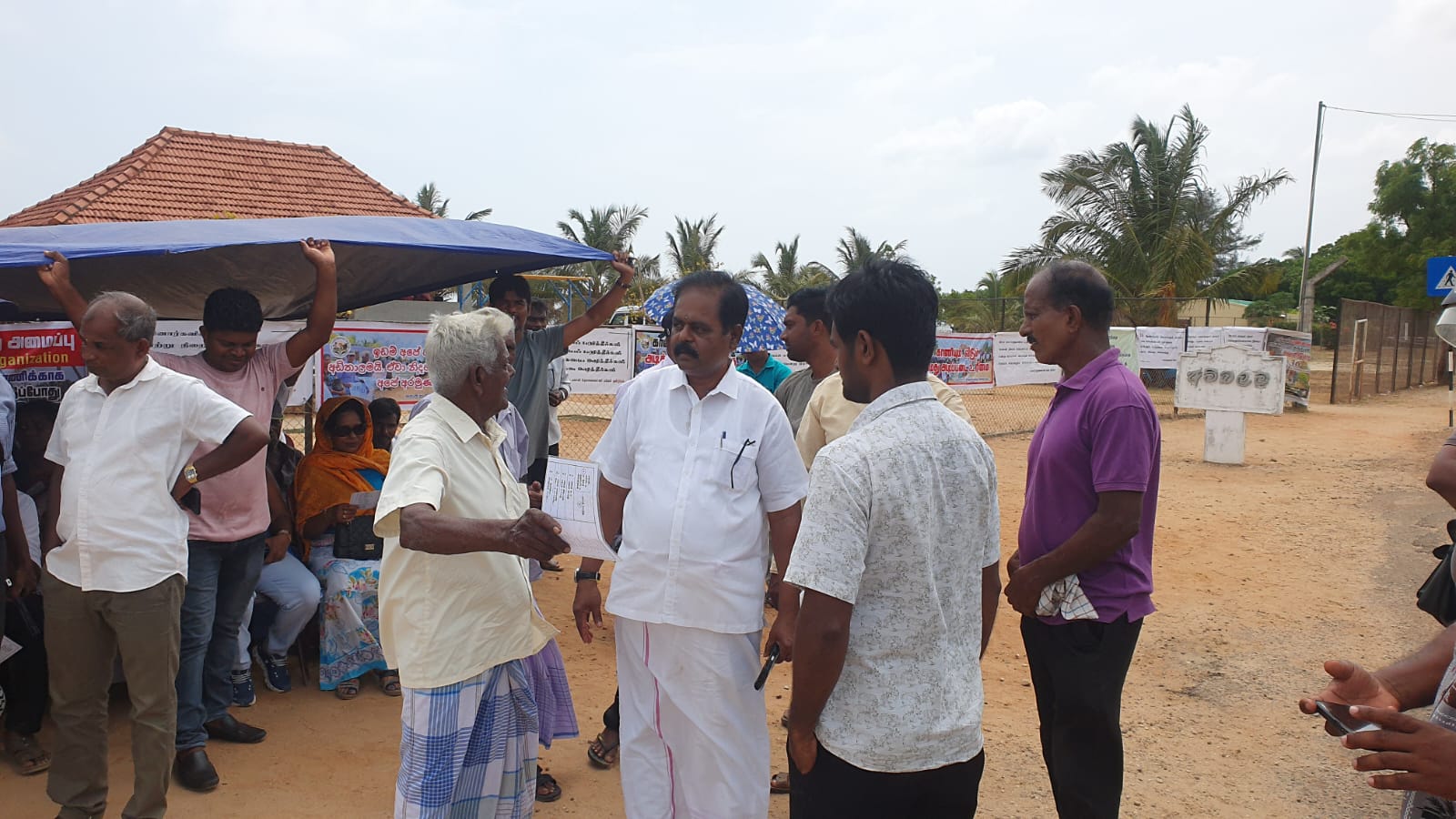
Demonstrators were left to continue without drinking water or sanitation despite prolonged exposure to extreme heat.
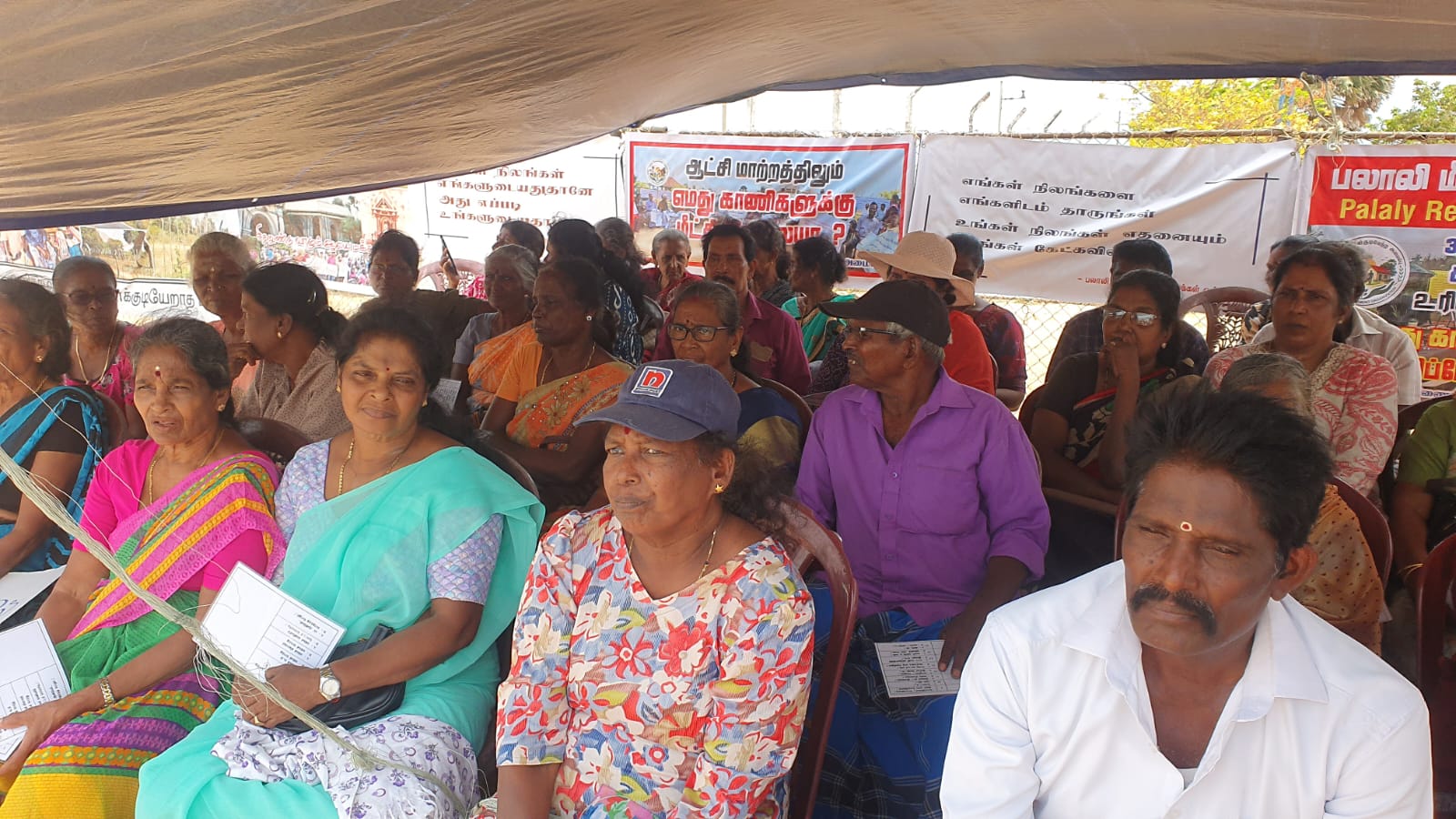
Protesters also reported that police refused them permission to erect even a temporary shelter, including simple wooden poles to support a tarpaulin, leaving elderly participants to hold the sheeting up by hand to shield themselves from the sun. July and August are among the hottest months in Jaffna, and conditions this year have been particularly severe.
According to local reports, Palaly Police recorded a statement from the Chairperson of the Valikamam North Pradeshiya Sabha over the placement of the water tank and toilet, and said the equipment would be produced before the Mallakam Magistrates Court and that legal proceedings would follow.
The removal came despite calls by the Northern Provincial Tourism Bureau for local authorities to establish and maintain public sanitation at tourist sites across Jaffna. The tank and toilet had reportedly been installed at the community centre for the use of tourists and visitors, and protesters had relied on them during their weekly demonstrations after being barred from putting up any shelter of their own. It is alleged that the facilities were removed specifically because they were being used by those taking part in the land rights protest.
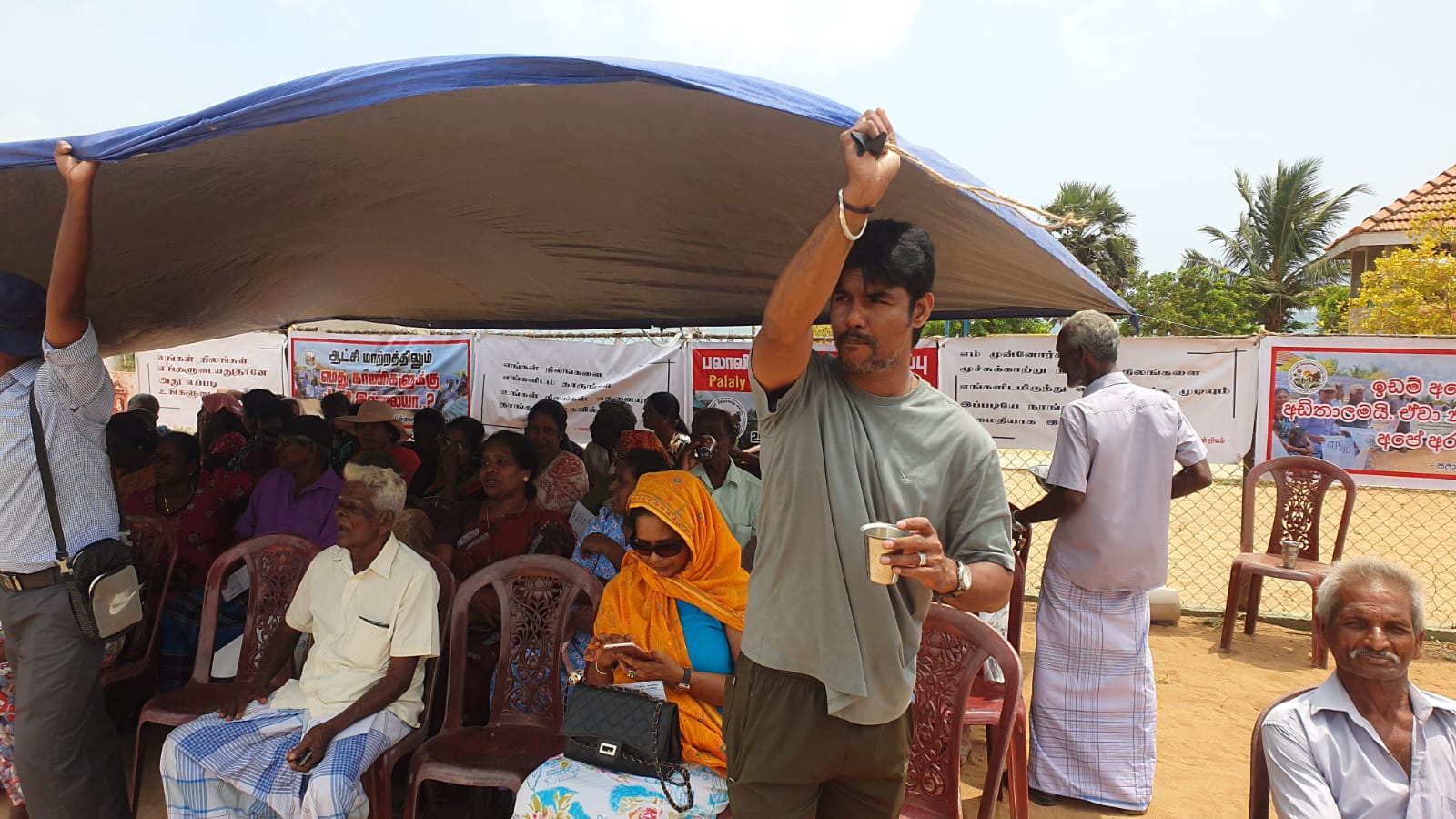
The action has generated alarm among residents, given the large number of elderly women and senior citizens taking part.
The measures raise concerns under both domestic and international law. Human rights standards hold that authorities have not only a duty to refrain from interfering with peaceful assemblies but a positive obligation to facilitate them. By stripping away water, sanitation and shelter while allowing the protest to proceed, the authorities risk creating conditions that disperse it by attrition, discouraging participation through hardship rather than open prohibition.
Sri Lankas own constitution prohibits cruel, inhuman or degrading treatment under Article 11 and guarantees freedom of expression and peaceful assembly under Article 14, while the removal of local authority property raises further questions over interference in the Valikamam North Pradeshiya Sabha. The treatment of communities displaced for decades also engages the UN Guiding Principles on Internal Displacement, which affirm the right of the displaced to return to their homes in safety and dignity.
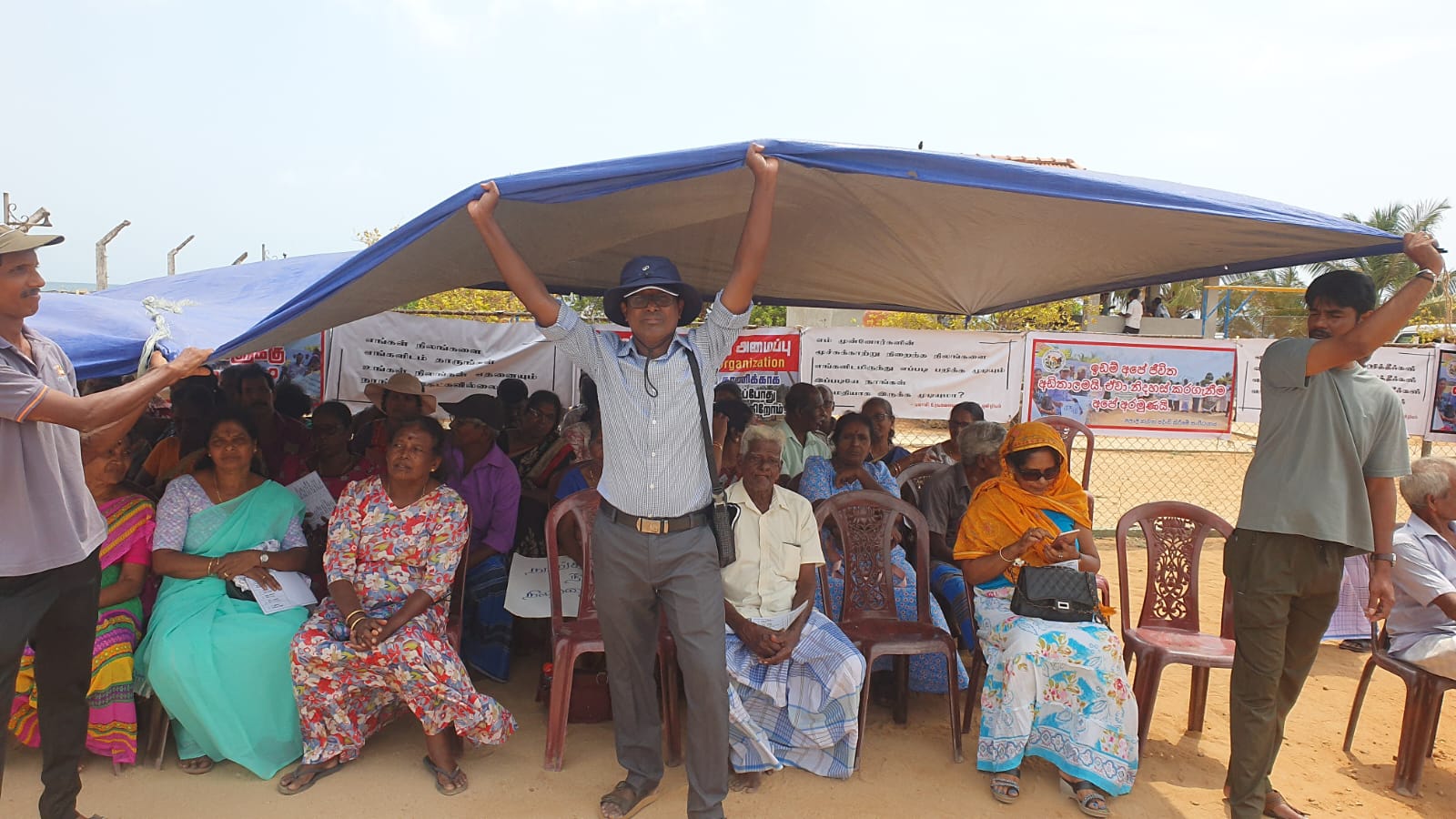
The Palaly protests run in parallel with a separate weekly demonstration outside the military commanders bungalow in Myliddy, which has continued for more than three months. Residents of Valikamam North were forcibly displaced in June 1990, after which the area was designated a High Security Zone, and more than 6,000 families remain displaced. Campaigners are demanding the withdrawal of the 2013 defence ministry gazette, under which some 6,317 acres were acquired for military use, even as Deputy Defence Minister Aruna Jayasekara told parliament this month that a further 1,661 acres in the North-East would be permanently acquired for military infrastructure and would not be returned.
The landowners have vowed to continue their demonstrations in the coming weeks until their lands are released from military occupation.
மேலும் படிக்க »
இந்த செய்தியைப் பற்றிய கருத்தை பதிவு செய்யுங்கள். மேலும் இந்த செய்தியை உங்கள் நண்பர்களுடன் பகிர்ந்து கொள்ளுங்கள்.