Editorial - Prison rules
Editorial - Prison rules by Thusiyan
Last week saw the second deadliest episode of prison violence in Sri Lankas history. Over two days at Negombo Prison, at least 28 people were killed, among them seven prison officers, and more than a hundred were wounded. By the time the violence which began on Sunday evening subsided, hospital staff were describing bodies with gunshot wounds arriving by the dozen, the air force had drones and a helicopter circling overhead, and thousands of relatives stood outside the walls begging for information that never came. Only the massacre of Tamil political prisoners at Welikada in 1983 has claimed more lives inside a Sri Lankan jail. It is a record the state should be haunted to approach.
The authorities have been quick to frame the bloodshed as a feud between drug gangs, sparked by leaked information about smuggling inside the prison. There is no reason to doubt that narcotics networks were involved. But the explanation conceals more than it reveals. Criminal networks do not merely survive inside Sri Lankas prisons; they govern them, ordering killings and running trafficking operations from their cells, shielded by political connections that reach well beyond the walls. Of the more than one hundred targeted shootings that punctured the island in 2024, over half were tied by police to organised crime, and the polices own crackdowns, seizing hundreds of mobile phones from inmates to sever contact between prisoners and the underworld, amount to an admission that the cell block has become a command post. A penal system that grants such freedom to criminal networks, under political patronage, carries its own tinder. The conditions make combustion certain.
Negombo Prison was built for 650 inmates and held roughly 2,400 when the violence began. Across the island, facilities designed for fewer than 12,000 people now hold more than 42,000. The majority languish in prolonged pre-trial detention, presumed innocent yet caged for years, while a disproportionate number are held for drug offences that, as the UN human rights office noted this week, warrant health-centred responses rather than incarceration. The desperation is not confined to the mens blocks. As the riot unfolded, women in the adjoining facility climbed onto their roof demanding release, and several were injured when part of it collapsed beneath them; prisoner welfare groups report that inmates had been complaining of a spreading dengue outbreak met with minimal care. A UN Subcommittee on Prevention of Torture delegation that visited only last month found no meaningful improvement in conditions since its previous inspection seven years ago. All of it was tolerated by the state.
Thankfully, and unlike so much of the prison violence that preceded it, Tamils were not the target this week. But the history that Negombo now sits alongside must not be forgotten. Sri Lankas prisons have frequently served as killing grounds for Tamils in the custody of the state. At Welikada in July 1983, 53 Tamil political prisoners were butchered with guards opening the cells to the mobs. Among the dead was Kuttimani, who had pledged to donate his eyes, and whose killers gouged them out. At Kalutara in 1997, Tamil detainees were beaten to death by fellow inmates. At Bindunuwewa in 2000, 27 Tamil youths held in a so-called rehabilitation camp were massacred while police looked on. Not one of these atrocities has produced any semblance of accountability. The perpetrators walked free and the message that those inside the walls can be killed with impunity was clear.
That lesson is being applied again in real time. In the days since the riot, two inmates transferred out of Negombo have died, one of them attributed to "sudden illness", and prisoner welfare groups allege that transferred inmates are being tortured in the facilities receiving them. The UN human rights office has cited reports of reprisals against inmates by guards at other prisons. When the Human Rights Commission of Sri Lanka despatched a rapid response unit to Welikada, it was denied entry. The current government promises a transparent investigation even as its own prison service turns the national human rights watchdog away at the gates.
Amnesty International and the UN are right to demand urgent, independent investigation, unfettered access for monitors, and action on overcrowding. But once more, the onus has been placed on the Sri Lankan authorities to investigate themselves, and history offers little hope on that front. The three-member committee announced by the justice minister joins a long lineage of such bodies, appointed in the heat of scandal and designed to outlast the worlds attention. The decades of prison violence against Tamils remain uninvestigated and unpunished precisely because every previous inquiry was entrusted to the very state whose officers opened the gates, stood aside, or pulled the triggers.
What is needed is not another committee but a systemic overhaul: an end to mass pre-trial detention, genuine independent oversight of every facility, and the dismantling of the political protection that lets criminal networks govern the cell blocks. And it must include the release of the Tamil political prisoners who remain unjustly detained, some for decades, under a Prevention of Terrorism Act this government promised to abolish. They sit tonight in the same combustible system that has just killed 28 people, held by a state with a proven record of letting its prisoners die. Until that system is dismantled rather than managed, Negombo will not be the last.
_________________
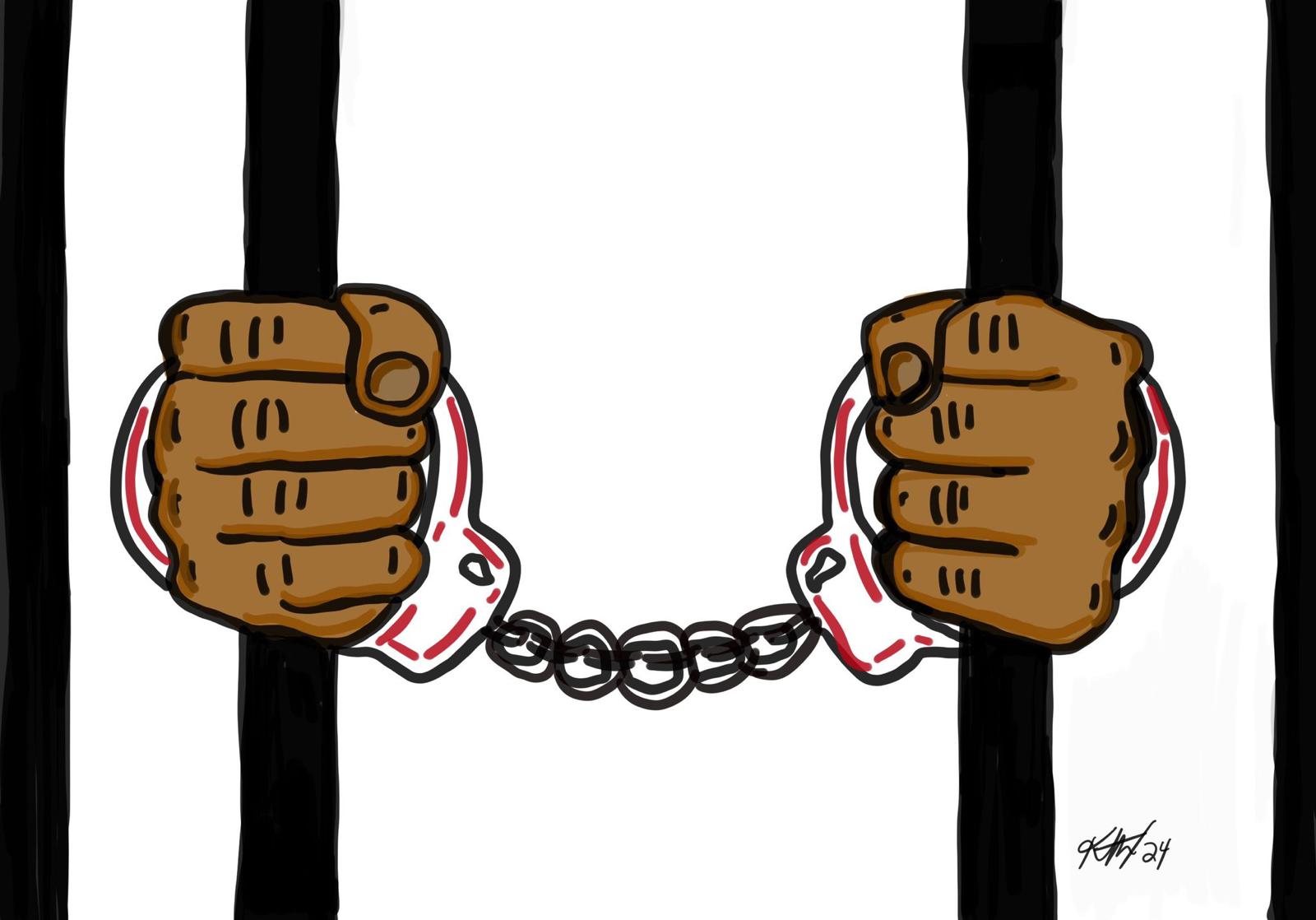
Illustration by Keera Ratnam.
மேலும் படிக்க »
இந்த செய்தியைப் பற்றிய கருத்தை பதிவு செய்யுங்கள். மேலும் இந்த செய்தியை உங்கள் நண்பர்களுடன் பகிர்ந்து கொள்ளுங்கள்.