We have to keep this revolution alive - Rebecca Devika Dharmpalan
We have to keep this revolution alive - Rebecca Devika Dharmpalan by Sharmini
Photograph by Ify Obi
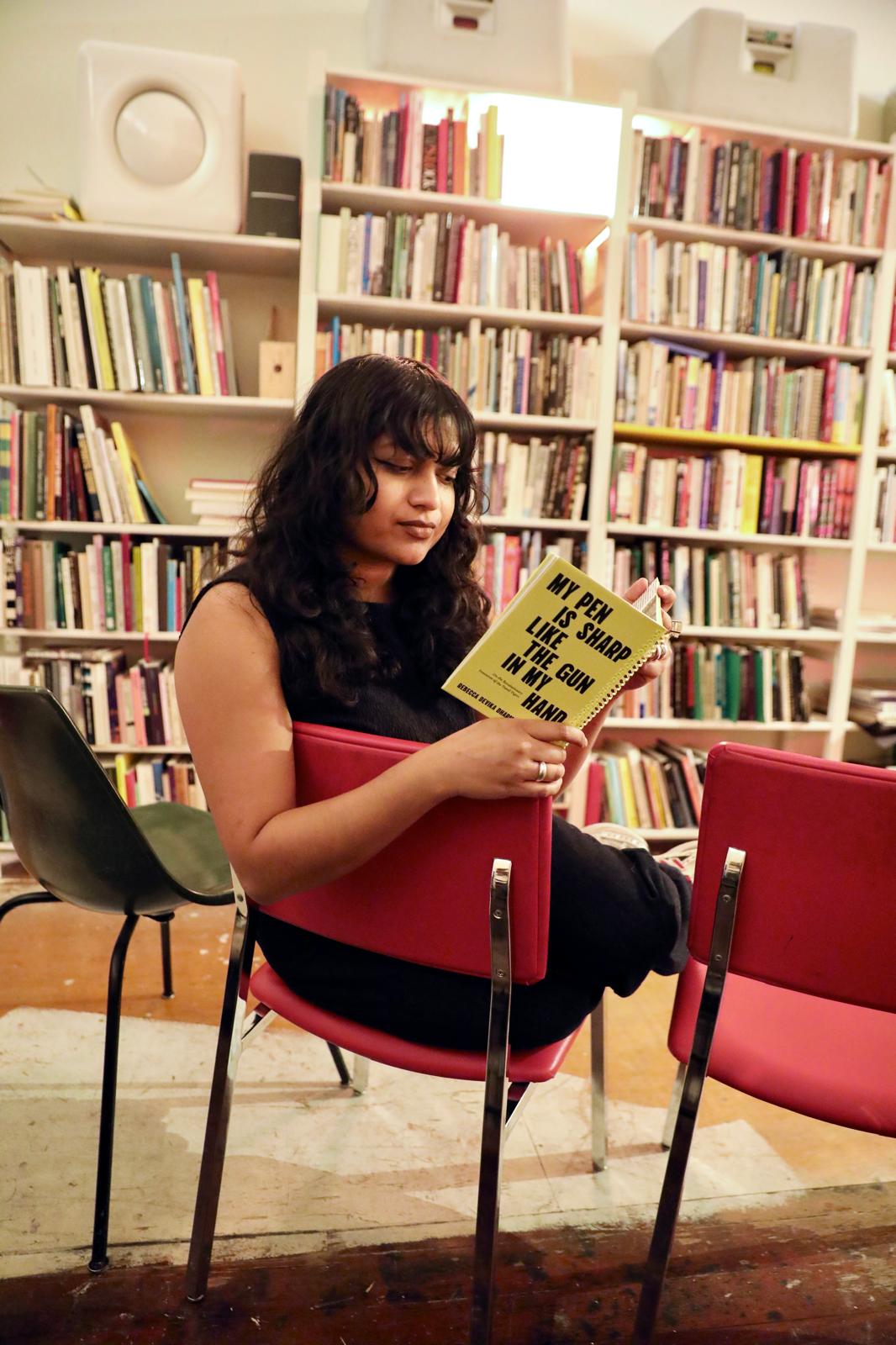
Rebecca Devika Dharmapalan spoke to Tamil Guardian following the publishing of her book “My Pen is Sharp Like the Gun in my Hand: The Revolutionary Feminism of the Tamil Tigers’ which centres the voices and lives of women cadres in the Liberation Tigers of Tamil Eelam (LTTE). Her research critiques the legal frameworks that construct a narrow understanding of the women who joined the LTTE.
Dharmapalan told Tamil Guardian about the importance of documenting the Eelam Tamil liberation struggle and preserving Eelam Tamil histories and lived experiences.
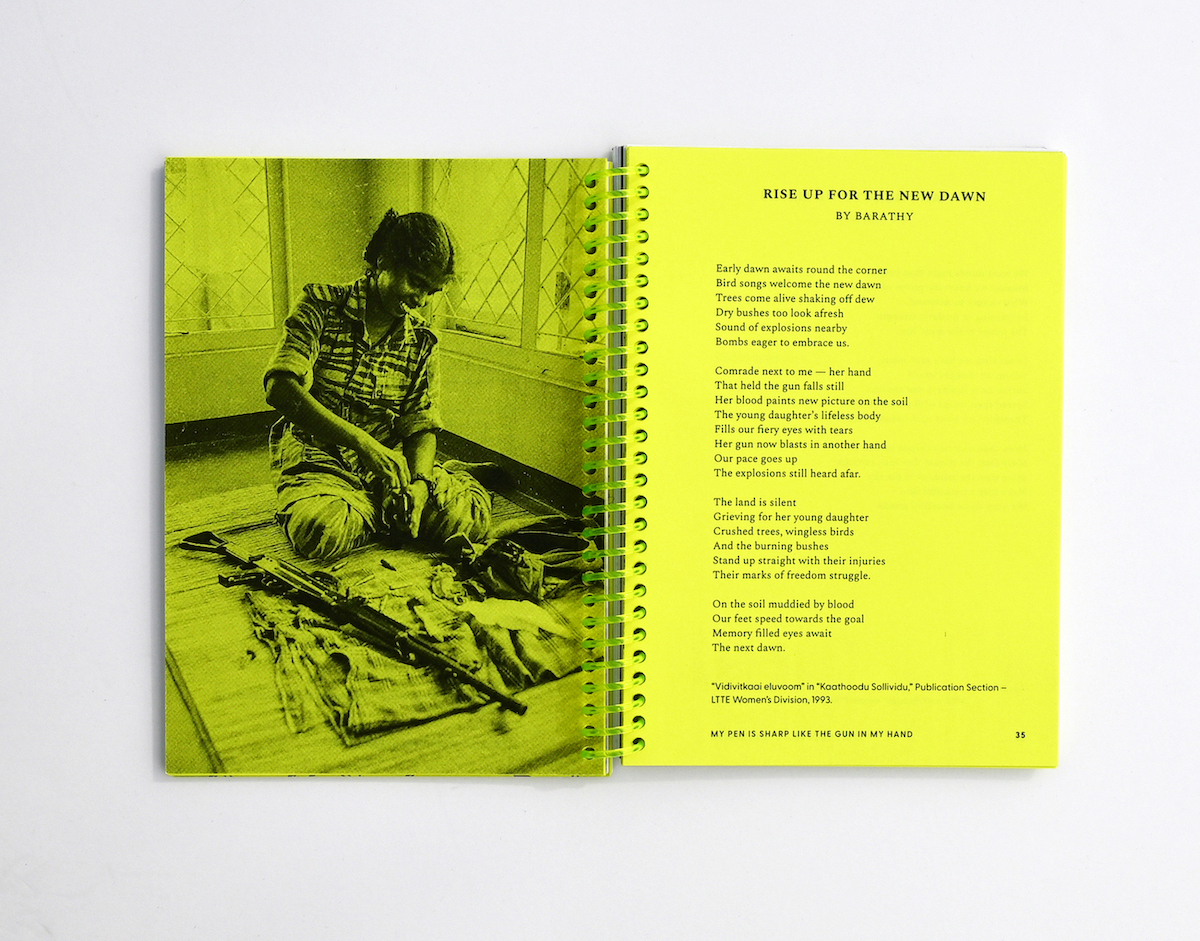
The book includes photographs by Roger Parton, poetry by LTTE cadres originally compiled and translated by Dr N Malathy and an interview by Dharmapalan and ‘K’, a former LTTE cadre.
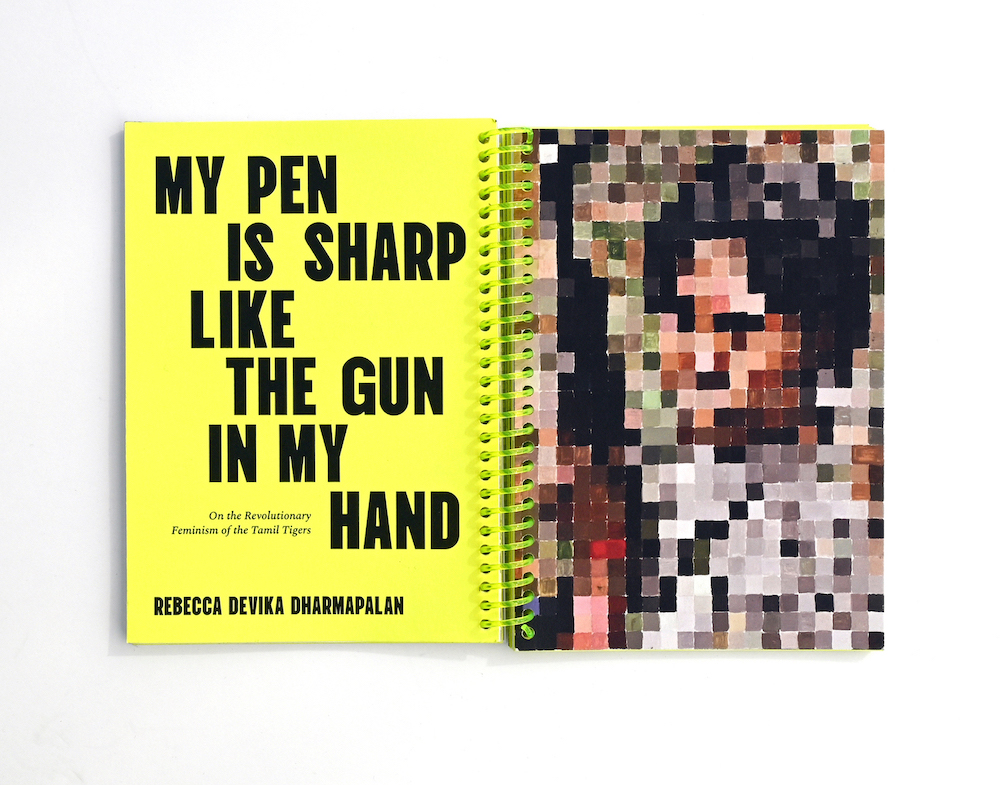
Photograph by Sming Sming Books. The book cover was designed by Dharmapalan’s sister, Mookah Dharmapalan, when she was a student at Oakland school for the Arts at the age of 14.
When asked why she wrote this book, Dharmpalan explained that like other Tamil youth, she was “moved” by the Eelam Tamil struggle for self-determination.
“For me personally, as I was growing and I was hearing about the armed conflict, I would try to engage with my family but they wouldn’t talk to me about it and it made me more curious.”
It was when Dharmapalan was studying for her Masters degree at SOAS University of London, that she said she realised that there was no recognition of the Tamil genocide.
“I started to hit walls within international legal frameworks and human rights law where I realised that we were not getting justice for our people,” Dharmapalan said.
Photograph by Sming Sming Books
"The way that the law was written, especially when it came to women, was this infantalisation of women in war. Where women were seen in parallel to women and children and that was not the case with our people, with Tamil women. Tamil women were involved as revolutionaries,” she added.
Dharmapalan went on to explain that the academic articles she was reading at the time were stating that women were coerced by the men in their lives into the LTTE, how they didn’t have any agency or how they were simply framed as terrorists.
She quickly realised the discrepancy in what was being written academically, what is being archived and what the reality is.
“This made me question where are these women’s voices in our story?”
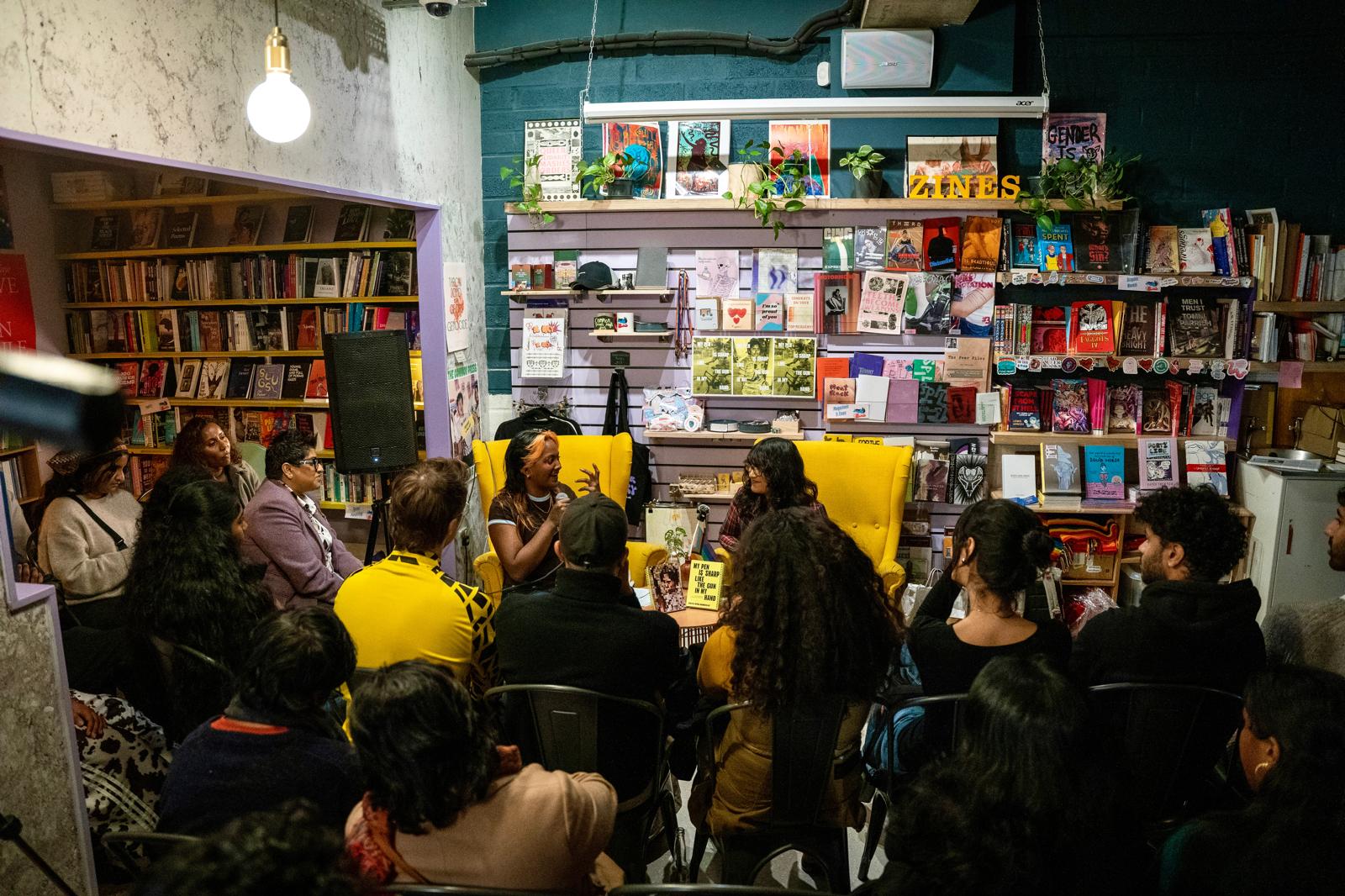
Photograph by Mahika Gautam
A key feature of the book is Dharmapalan’s interview with ‘K’, a former LTTE cadre who now resides in London. When asked why she chose to conduct an interview with a former female cadre, Dharmapalan said:
“I was stuck in my research and the sources I was going to for information were either inaccurate or racist or didnt include women’s voices.
There were a lot of scholars drawing theoretical conclusions that if you have a nationalist agenda, then you cannot have a feminist imagination but they would cite a random interview or pull a quote from a manifesto.”
She went on to emphasise the importance of speaking to and amplifying the voices of female cadres who participated in the armed struggle, to ensure that Tamil experiences are heard and preserved accurately.
“One thing that fascinated me about my interview with K was how she was this revolutionary fighter but she was living a civilian life in the UK. The ability to live such polarising lives in one lifetime was so crazy to me - it was outstanding.”
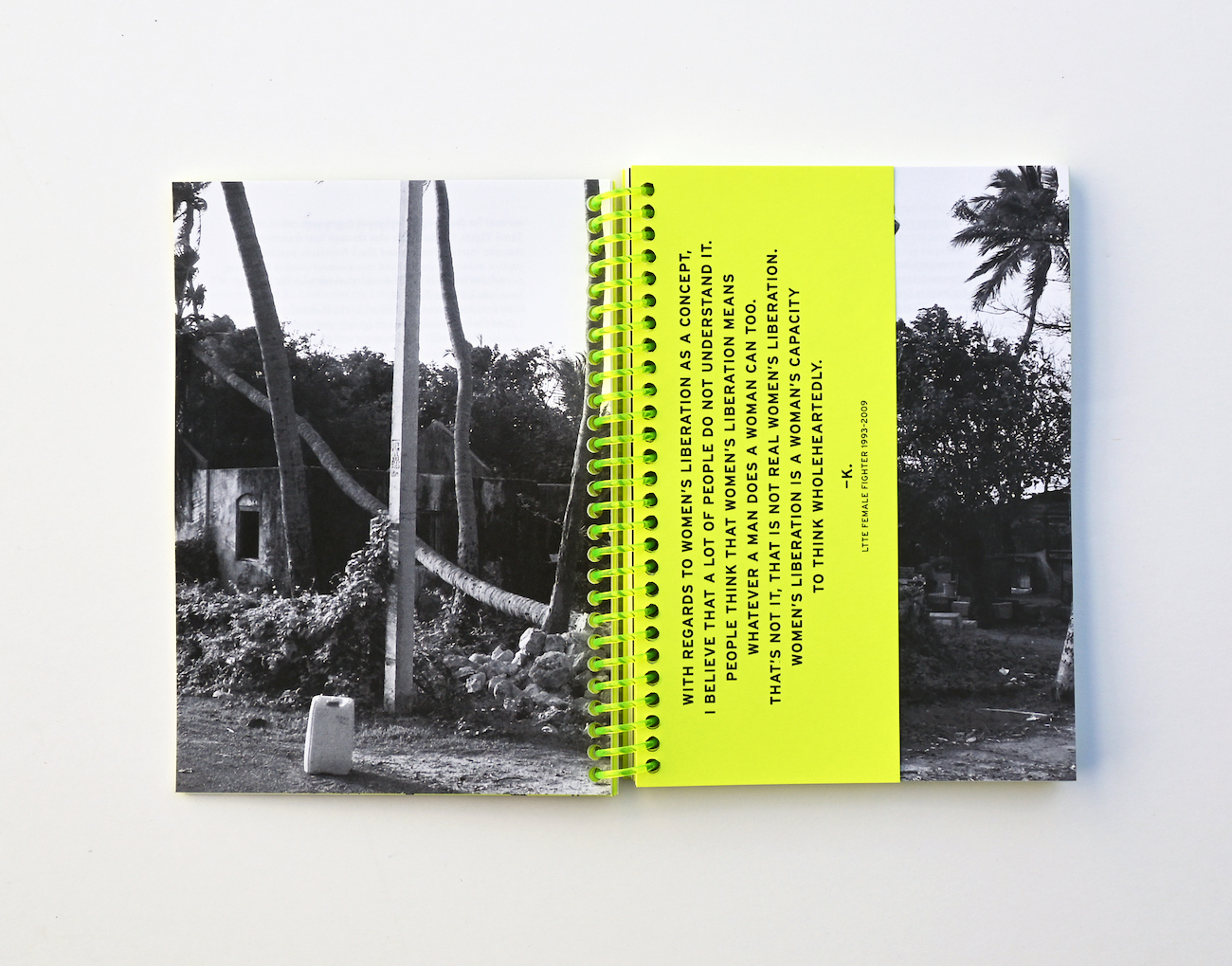
Photograph by Sming Sming Books
Dharmapalan’s book also includes poems and short stories that were written by LTTE female cadres and translated by N Malathy. When asked about the selection process, she explained that she chose the works that directly relate to the points she sought to make in her book.
She gave the example of ‘Oh, the UN’ by Barathy in 1993.
“The struggle I had trying to understand international law and why it didn’t apply to us was something that was already known in 1993 by Bharathy. She knew things that had taken us in the diaspora decades to reckon with. These bodies of power do not show up for us. They don’t care about lives so we have to stand up for our families and for our communities.
Dharmapalan went on to explain that she included these pieces of work to show that women fighting for Tamil liberation were more than “nameless bodies that were on the battlefield. They were thinkers, writers, poets, philosophers and feminists - iconic feminists.”
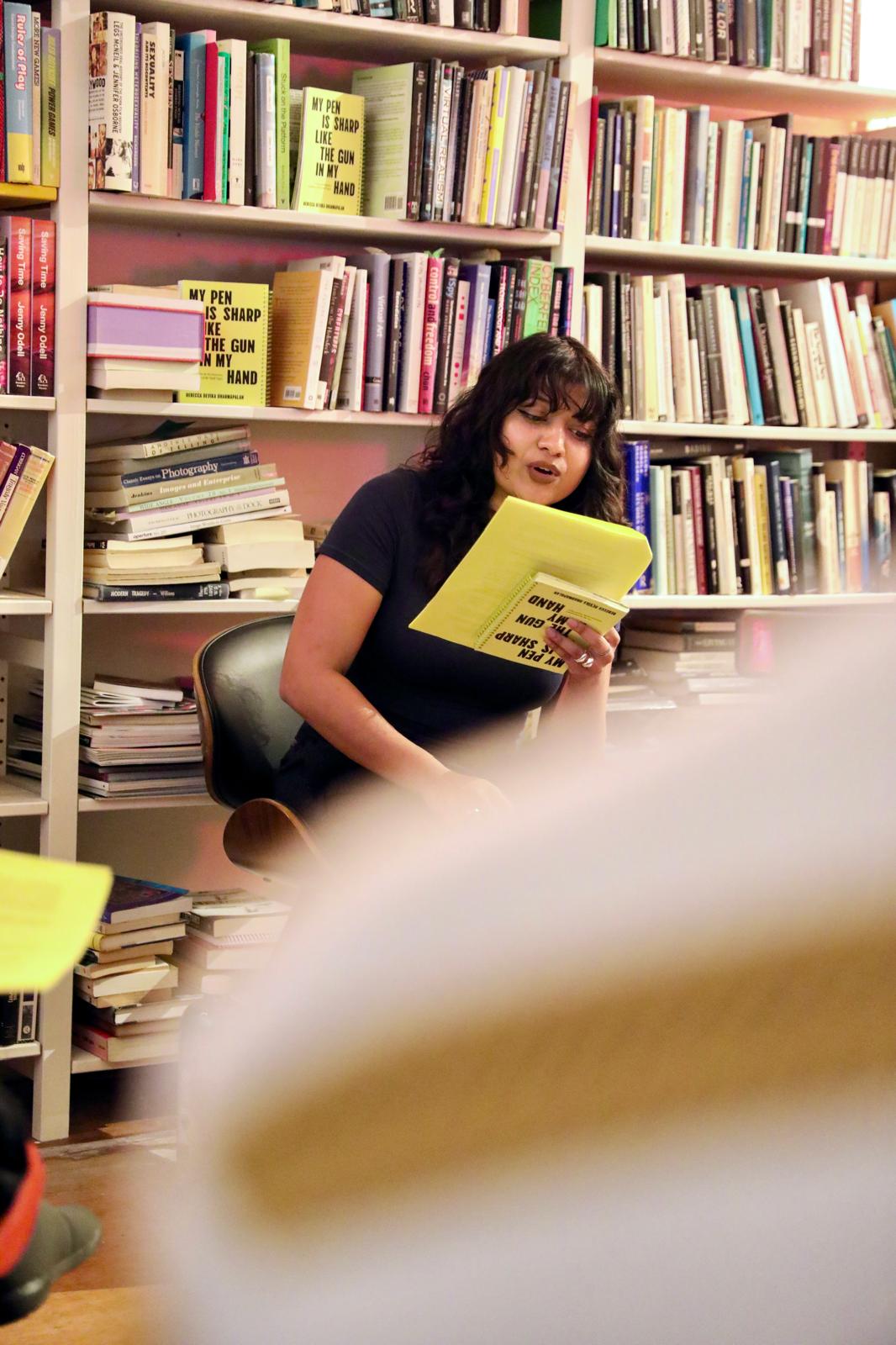
Photograph by Ify Obi
Throughout the interview, Dharmapalan emphasised the importance of documenting Eelam Tamil stories and narratives.
“There’s so much documenting work that needs to happen. This work doesn’t start or end with me. It is our responsibility to do this archival work and commit ourselves to telling these stories because that is what they [former cadres] are asking us to do.
Dharmapalan added that “Tamils have had a history of having our stories destroyed - whether it be through the burning of Jaffna library or inaccurate reporting of what happened during the [armed] conflict.”
“A huge part of how genocide happens, its not just the killing and destruction of apeople, it is the ontological destruction of the culture, identity, the writing and the theories about our people.”
“We have to keep this revolution alive, to fulfil the promise we have to these women, is to continue to tell these stories accurately.”
மேலும் படிக்க »
இந்த செய்தியைப் பற்றிய கருத்தை பதிவு செய்யுங்கள். மேலும் இந்த செய்தியை உங்கள் நண்பர்களுடன் பகிர்ந்து கொள்ளுங்கள்.