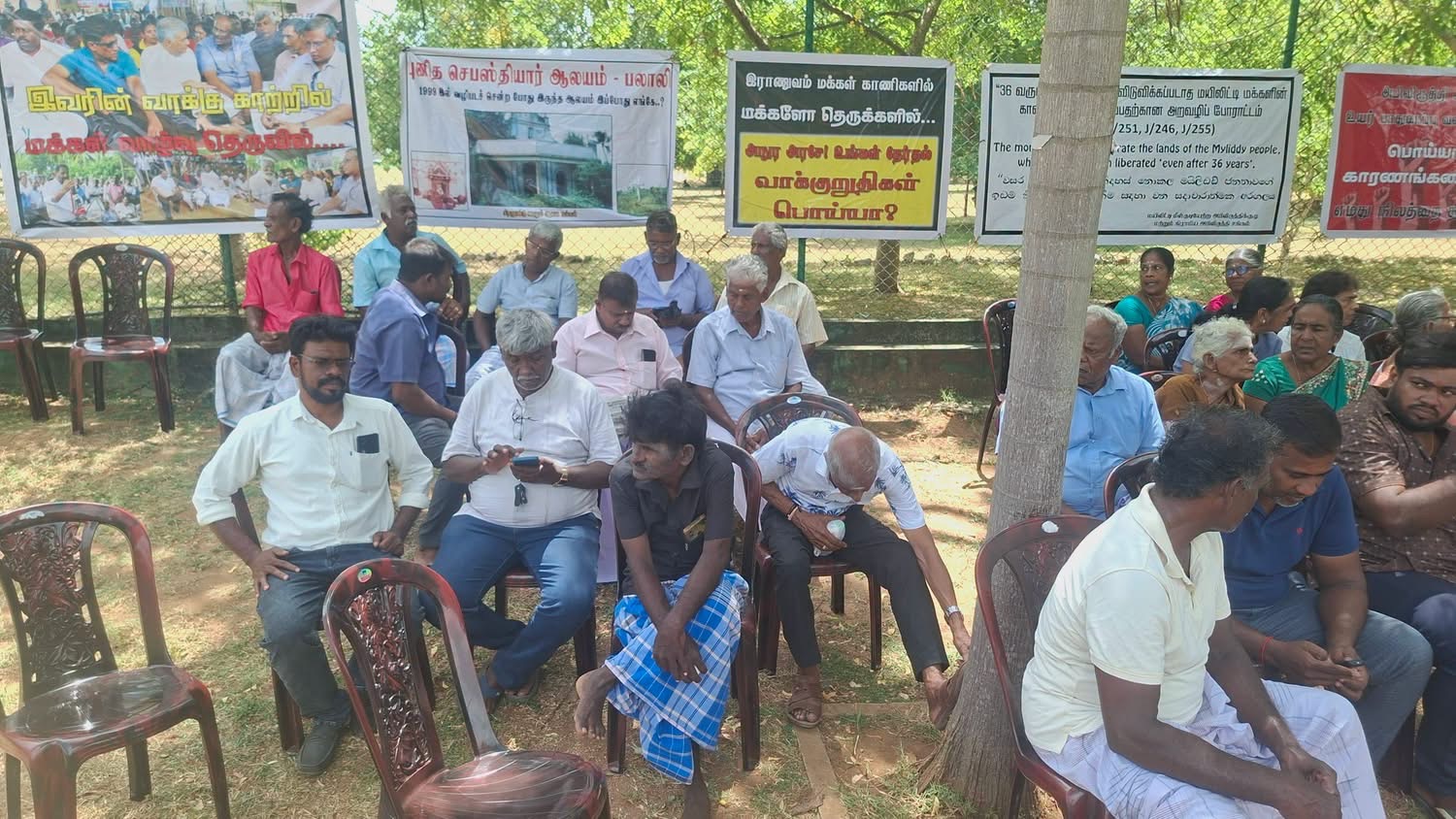
Valikamam North landowners protest for 11th week against military occupation
Valikamam North landowners protest for 11th week against military occupation by abilash
Displaced Tamil landowners from Valikamam North staged their 11th consecutive weekly protest on Friday, demanding the release of hundreds of acres of privately owned land that remain under Sri Lankan military occupation more than three decades after they were forced from their homes.
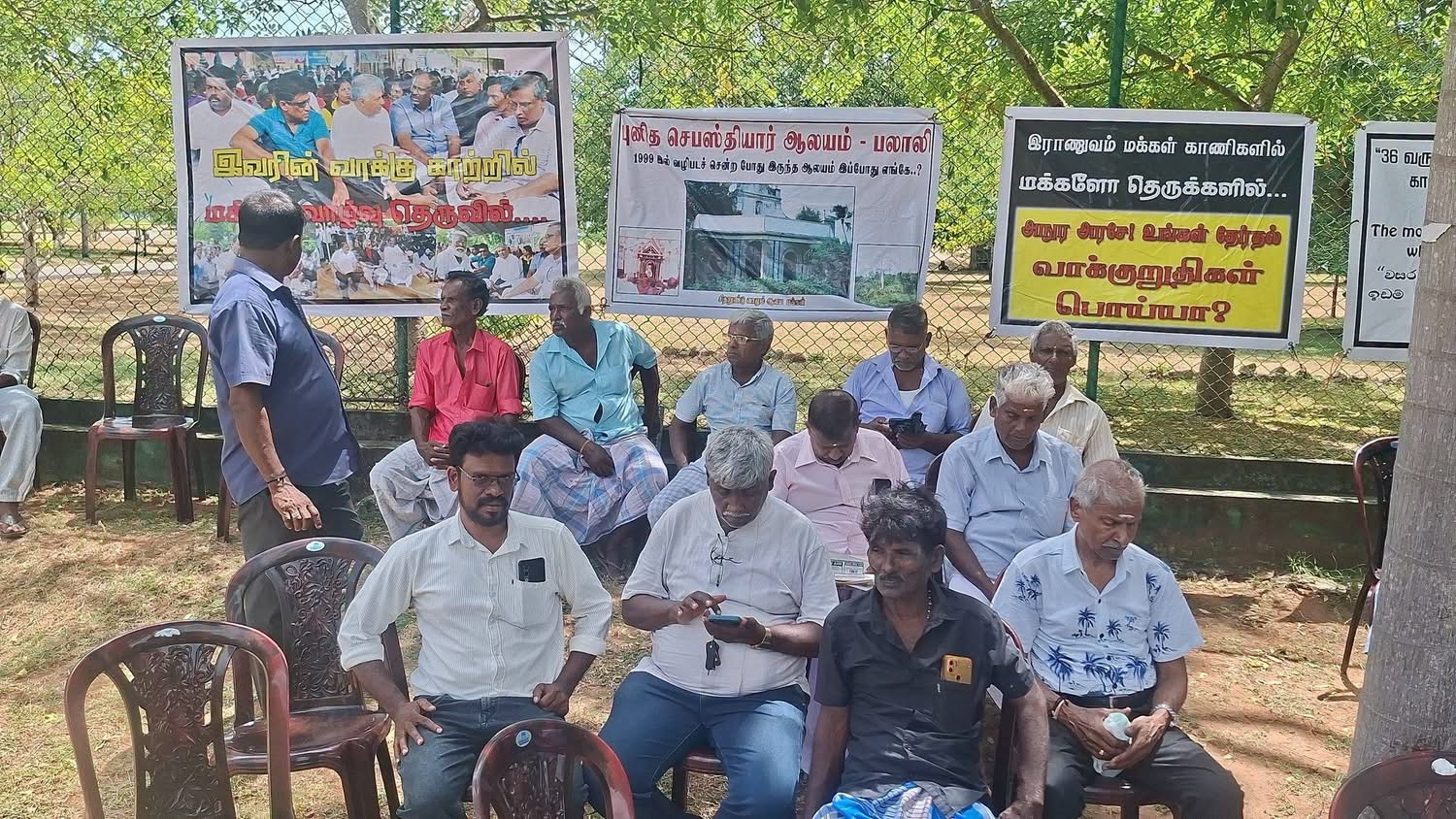
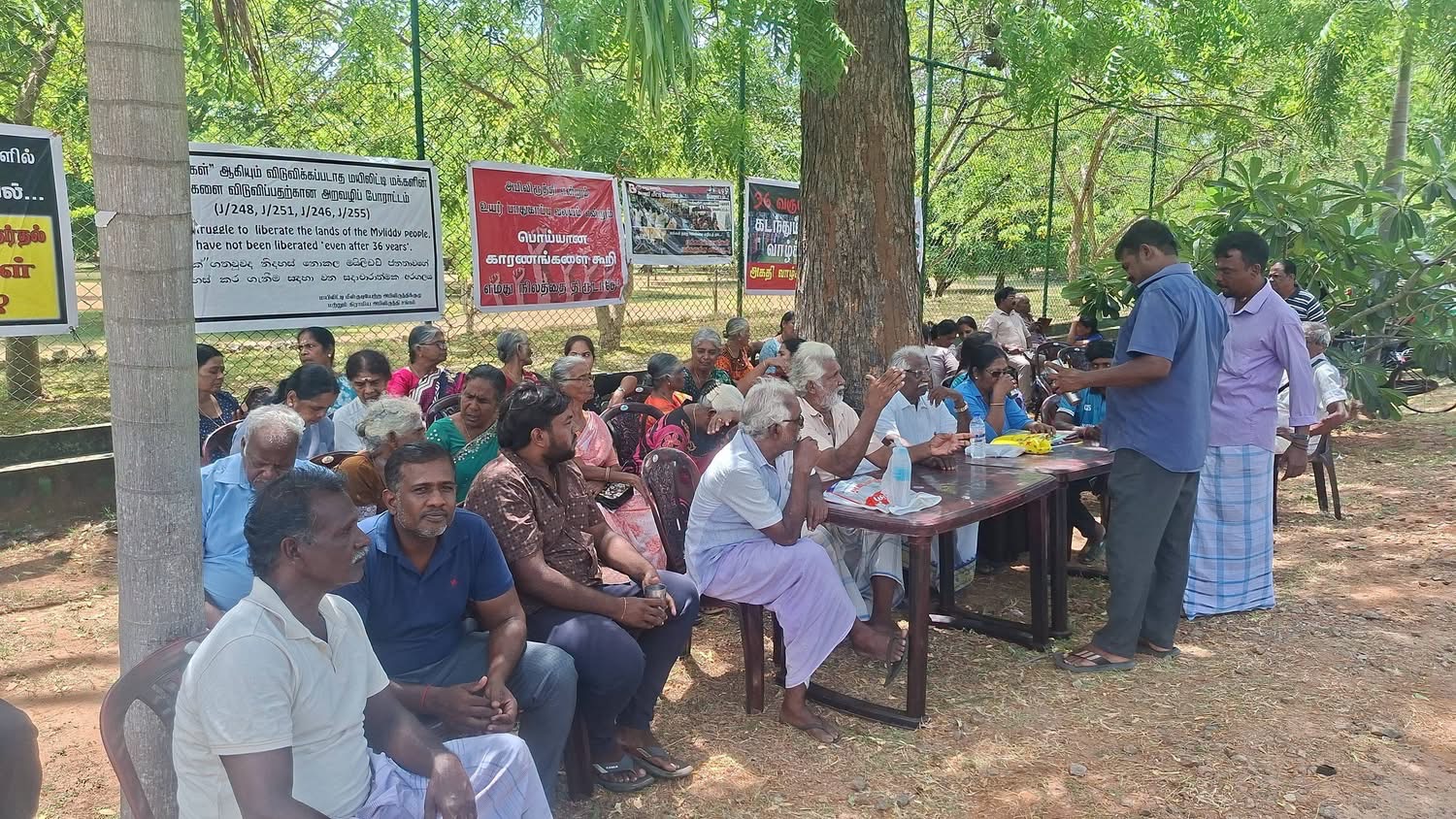
The demonstration was held outside the military Commander’s Bungalow in Myliddy, where protesters once again called for the release of approximately 651 acres of private land still retained within the Valikamam North High Security Zone.
Residents from Grama Niladhari Divisions 249, 256, 248, 251 and 255 said they were forcibly displaced in June 1990, when the area was brought under a High Security Zone during the armed conflict.
More than 17 years after the end of the armed conflict, they say the Sri Lankan military continues to occupy the area, leaving rightful owners unable to return to their homes, lands and coastal livelihoods.
Despite years of campaigning, petitions and appeals to successive governments, the landowners say their properties have still not been released.
They have now resolved to hold continuous protests every Friday until the land is returned. Friday’s demonstration, held on 3 July, marked the eleventh consecutive week of the protest campaign.
Protesters said the continued occupation of their lands is still justified by the Sri Lankan state under the pretext of national security, even though many occupied areas are now being used for purposes unrelated to security.
Across Valikamam North, activists have long pointed to the military’s control over land along the northern coastal belt, particularly between Point Pedro and Kankesanthurai, where large areas of private Tamil-owned land remain under state occupation.
Instead of being returned to displaced families, parts of these lands have been used for military-run farms, welfare shops, tourist facilities and accommodation for senior officers.
For residents, the Commander’s Bungalow in Myliddy has become a visible symbol of that occupation.
Campaigners argue that the military’s commercial activity has deepened the economic impact of displacement.
Visitors from southern Sri Lanka and overseas often patronise military-run shops, accommodation and recreational facilities instead of locally owned businesses, diverting income away from the Tamil communities whose lands were seized.
The Sri Lankan military also operates tourist locations within former and current security zones, including areas around Kankesanthurai Beach, which would ordinarily fall under local civilian administration.
Activists say revenue generated from these sites flows to institutions controlled by the central government or the military itself, rather than strengthening the local economy in Jaffna.
The issue extends beyond tourism.
Campaigners have also criticised the limited use of Kankesanthurai Port, arguing that a fully functioning harbour could help strengthen the northern economy by allowing direct imports and reducing dependence on ports in the south.
Instead, they say goods continue to be routed primarily through southern ports, increasing transport costs for people in the North-East while improvements to local transport and trade infrastructure remain slow.
The continuing protests in Myliddy form part of a wider struggle across the Tamil homeland, where displaced families in areas including Kepapilavu, Thaiyiddy and other parts of the North-East continue to demand the return of private land still occupied by the Sri Lankan military.
Successive Sri Lankan governments have repeatedly announced land releases, but Tamils say large areas remain inaccessible, while the military continues to retain land for camps, resorts, farms and other facilities.
In Valikamam North, the elderly landowners gathered outside the military bungalow said their demand remains unchanged: the return of the lands from which they were displaced more than three decades ago. With no meaningful response from the government to their weekly demonstrations, protesters said they will continue gathering every Friday until their lands are released.
மேலும் படிக்க »
இந்த செய்தியைப் பற்றிய கருத்தை பதிவு செய்யுங்கள். மேலும் இந்த செய்தியை உங்கள் நண்பர்களுடன் பகிர்ந்து கொள்ளுங்கள்.