Colombo does not need the Kfir — it needs Israel
Colombo does not need the Kfir — it needs Israel by Thusiyan
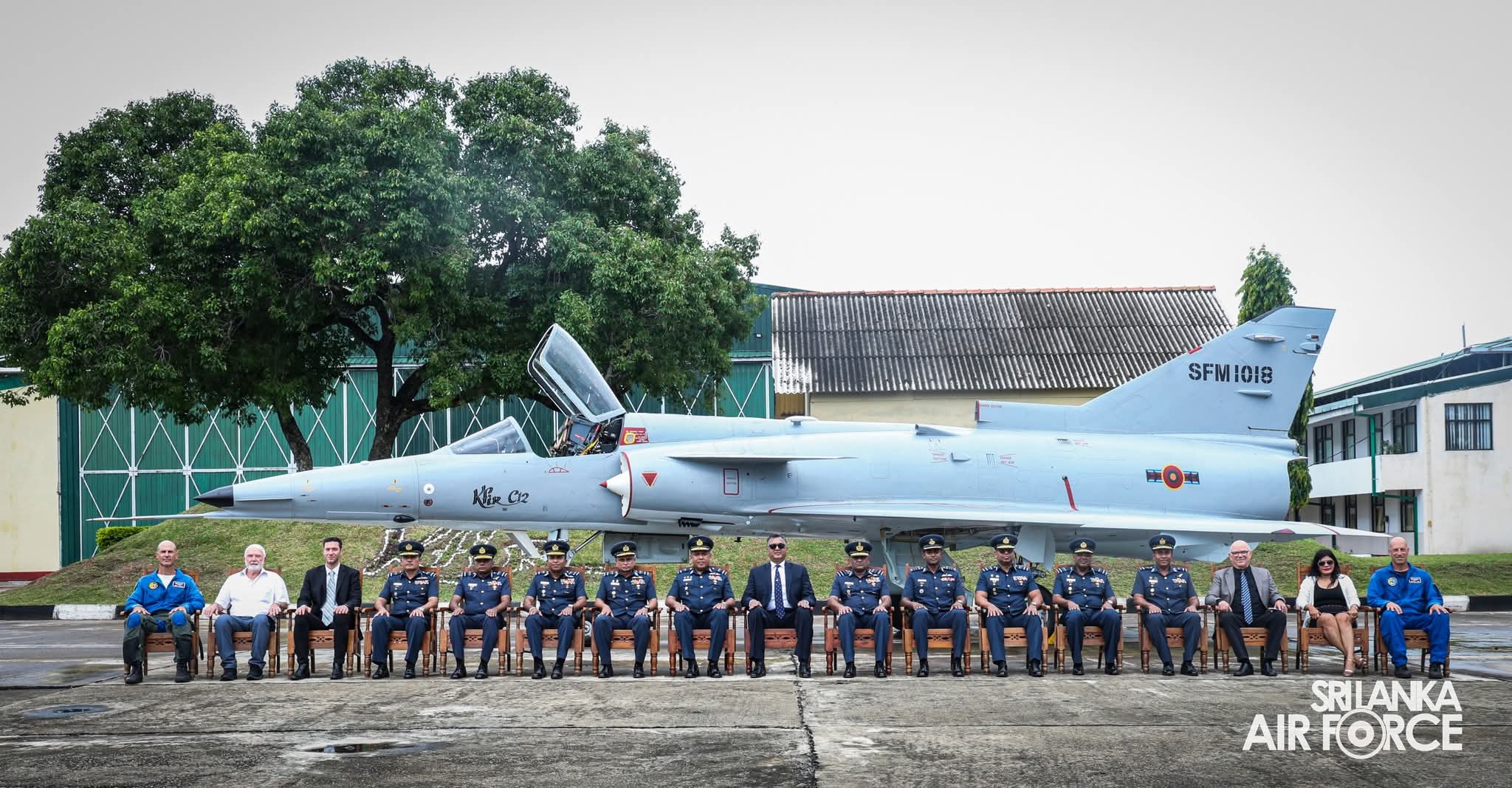
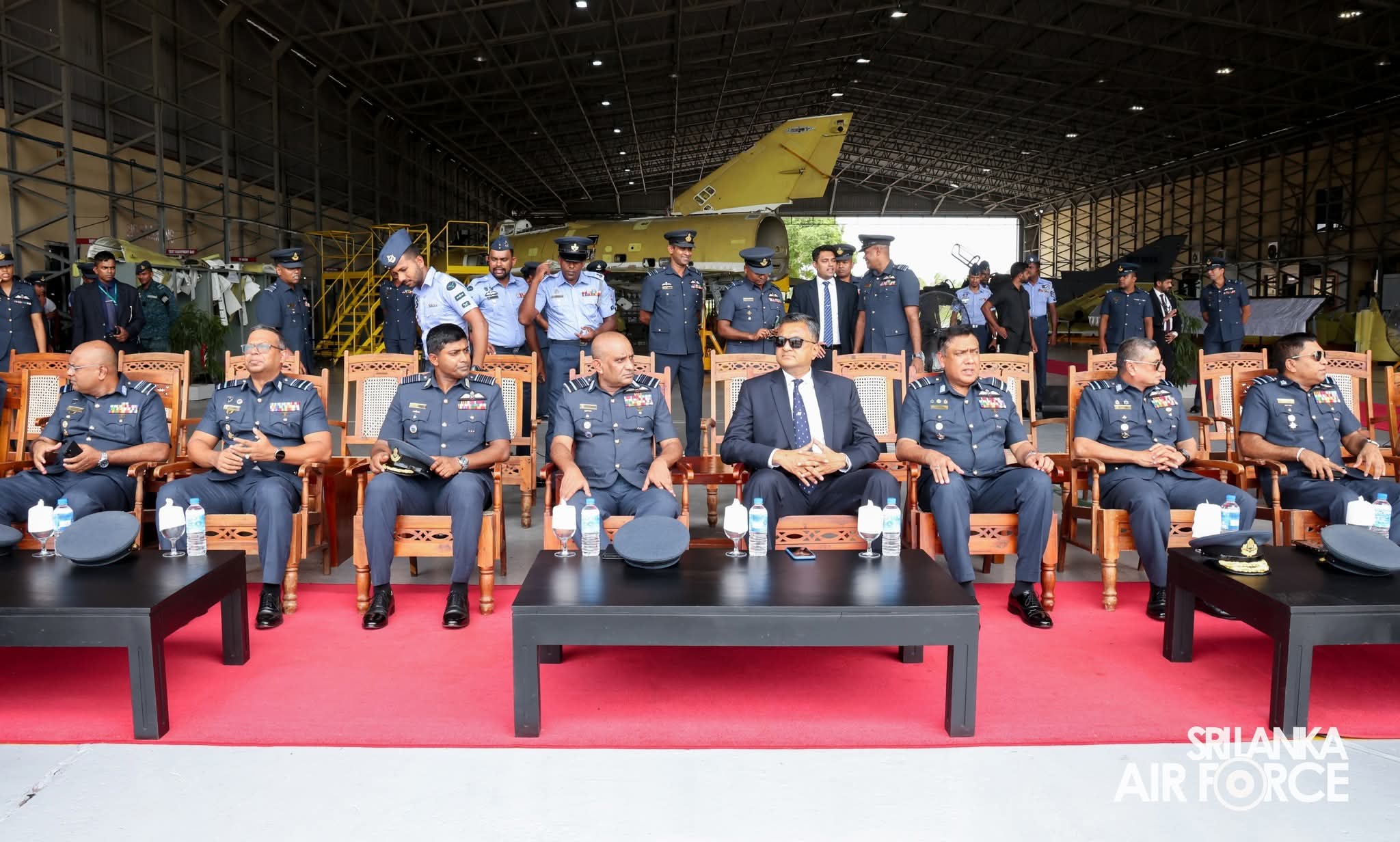
On 11 June, the Sri Lanka Air Force conducted the first test flight of an upgraded Kfir C12 fighter at its Katunayake base, presenting the flight as a military milestone. The aircraft is one of five being rebuilt — four C2 and C7 jets plus a TC2 trainer — to C12 standard under a US$50 million contract signed with Israel Aerospace Industries in 2021. The work, carried out alongside IAI specialists, fits a new glass cockpit, modernised avionics and mission systems, and what the Air Force describes as enhanced precision strike and multirole capability.
The official framing is one of Sri Lankan defence. It does not survive contact with the question of who, in 2026, this aircraft is meant to defend against.
Sri Lanka faces no rival air force, no airborne threat, and no armed conflict. The war the Kfir fleet was acquired to prosecute ended in 2009, with horrific massacres and atrocities. The justifications offered by the Air Force describe tasks that do not require a refurbished multirole fighter capable of precision air-to-ground strikes.
The decision to commit US$50 million to the programme is harder still to read as a defence necessity when its timing is considered: the contract was signed in 2021, as Sri Lanka was sliding towards the sovereign default it declared the following year and the deepest economic crisis in its post-independence history. A bankrupt state chose to spend tens of millions of dollars returning grounded, three-decade-old warplanes to service.
The expenditure makes little sense as procurement. It makes a great deal of sense as the maintenance of a relationship.
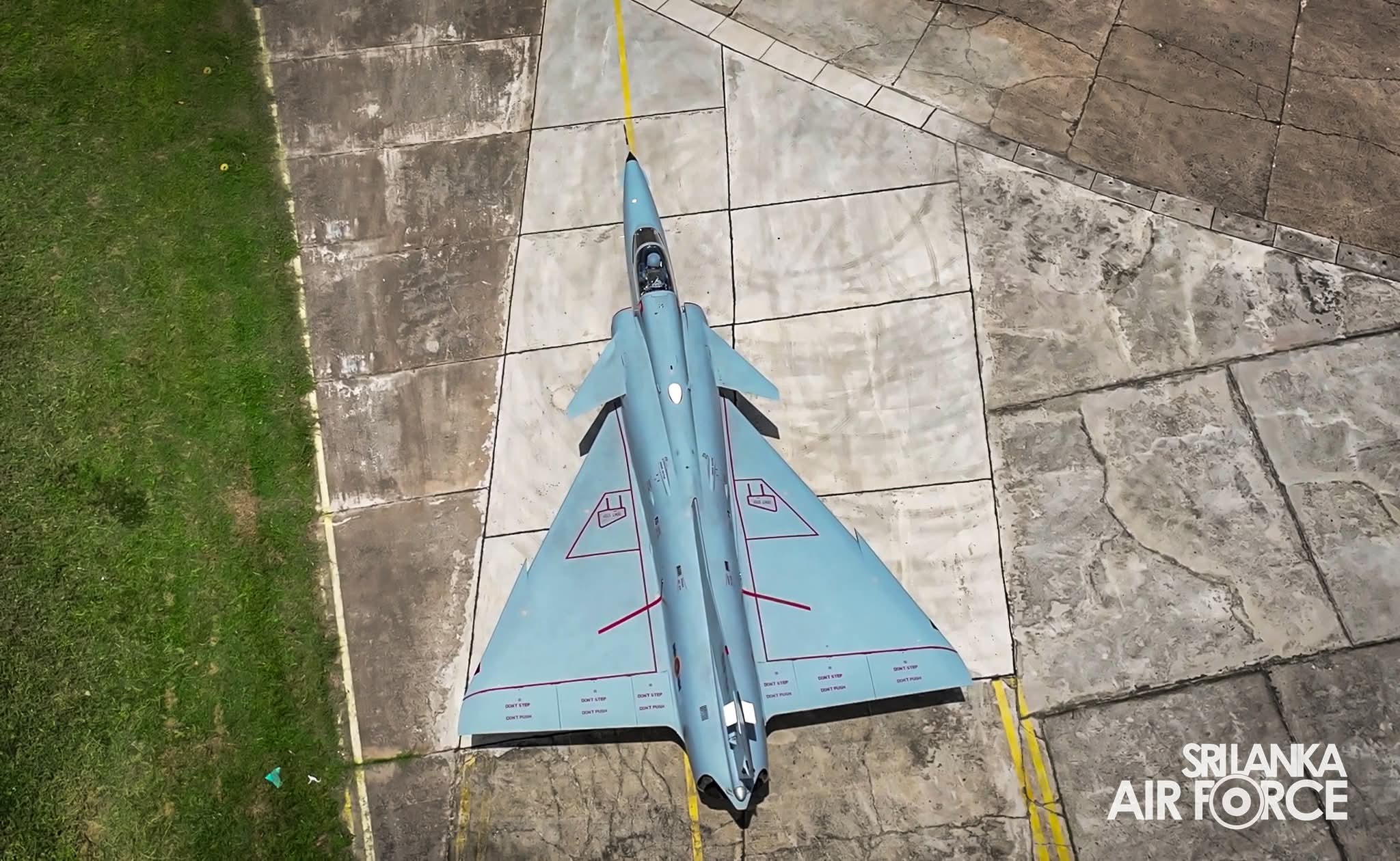
The Kfir is a particular kind of aircraft to choose for that purpose. It is inseparable from Sri Lankas air campaign against the Tamil homeland. The fleet entered service in 1996, flying from No. 10 Squadron at Katunayake - roughly 25 minutes flying time from the North-East - and became one of the most recognisable instruments of the bombing campaigns that followed.
One of the most notable example of Kfir attacks was on 14 August 2006, when four Air Force jets bombed the Sencholai childrens home at Vallipunam, killing 53 schoolgirls and three teachers. The site had been designated a humanitarian zone, and its coordinates had been passed to the Sri Lankan military through UNICEF and the ICRC. No member of the Sri Lankan armed forces has been held accountable.
This is the aircraft Colombo has elected, in peacetime, to refurbish and fly again.
That choice is consistent with a relationship that long predates the armed conflict and has comfortably outlived it. Sri Lanka formally severed diplomatic relations with Israel in 1970, yet declassified documents record cooperation deepening through the mid-1980s in spite of that break, with Israel supplying equipment and training as the conflict escalated.
Over the following decades Israel became one of Colombos most significant military suppliers, providing Kfir fighters, Shaldag and Super Dvora fast attack craft, and unmanned aerial vehicles. Sri Lankan military sources have acknowledged that those Israeli-supplied drones were used to direct artillery and air strikes during the closing offensives. The relationship has been sustained across changes of government, ideology and circumstance - through the severing of formal ties and their later restoration, through war and its aftermath.
The IAI contract is the most recent expression of an arrangement that successive administrations in Colombo have treated as a fixed point.
The military dimension is only one part of it.
The other, and the more economically consequential, is labour. Sri Lanka sends workers to Israel under a series of bilateral agreements covering six sectors - caregiving, agriculture, construction, hotels and housekeeping, manufacturing, and restaurant work - and has steadily widened them.
In December 2025 the two governments signed a further memorandum to open service-sector employment, and the Bureau of Foreign Employment has repeatedly raised quotas and eased application caps. Agricultural departures to Israel rose by more than 30 percent between 2024 and 2025. These expansions have continued without interruption while Israel has prosecuted the war in Gaza and conducted strikes across Lebanon.
The context in which this labour is being supplied is not incidental to it. As the Tamil Guardian has documented, a substantial share of the Sri Lankans now working in Israeli construction, agriculture and services are filling roles vacated by Palestinian labourers, who were barred from work after October 2023 through mass permit cancellations and movement restrictions. Palestinians had long formed the backbone of Israels construction workforce; Israeli employers have stated plainly that foreign workers, Sri Lankans among them, were brought in to replace them and keep production lines and building sites operating. Sri Lankan labour is, in concrete terms, helping to absorb the economic cost to Israel of excluding Palestinians from their own livelihoods.
For Colombo, the calculation is financial. Worker remittances reached a record of roughly US$7.8 billion in 2025, the largest annual inflow on record, recovering from a low of US$3.78 billion in 2022 at the depth of the crisis. More than 310,000 Sri Lankans left for foreign employment in 2025, and remittances now function as one of the countrys principal non-debt sources of foreign exchange, central to servicing its obligations under the IMF programme. Israel is a growing destination, and one the government has actively courted. The states willingness to deepen the labour relationship is, like the Kfir contract, a measure of how much value Colombo places on the connection to Tel Aviv - enough to expand it precisely when the political cost of doing so is rising.
That cost is rising because much of the rest of the world is moving in the opposite direction.
Since 2023, more than two dozen states have restricted or ended arms dealings with Israel over its conduct in Gaza. Spain legislated a total arms embargo in 2025; Slovenia became the first EU member to ban all arms trade with Israel; Italy, Canada, the Netherlands and Belgium imposed partial suspensions; Germany suspended exports that could be used in Gaza before reversing the decision months later. The twelve-member Hague Group committed in mid-2025 to halting arms transfers altogether, and the European Union has come under sustained pressure to suspend its Association Agreement with Israel. The measures have been uneven and frequently porous, but the direction of travel across much of the international community is towards distance and constraint. Sri Lankas is towards Israel Aerospace Industries workshops and fresh labour protocols.
This is the same government whose president called for a ceasefire in Gaza from the floor of the United Nations, and whose ministers periodically restate support for Palestinian statehood. Colombos professed solidarity with Palestine has always sat awkwardly beside the substance of its conduct, and the gap is now wider than ever.
A state that severed relations with Israel in 1970 in the name of that solidarity is, half a century later, refurbishing Israeli warplanes it has no military use for and supplying labour that helps Israel manage the consequences of barring Palestinians from work.
For Tamils, who watched the same state perfect the methods of siege, denial and unaccountable air power that have since been visited on Gaza, the distance between the two has never required much explaining. The Kfirs return simply states it again, in public, at Katunayake.
_____
Theepan is a staff writer at the Tamil Guardian.
மேலும் படிக்க »
இந்த செய்தியைப் பற்றிய கருத்தை பதிவு செய்யுங்கள். மேலும் இந்த செய்தியை உங்கள் நண்பர்களுடன் பகிர்ந்து கொள்ளுங்கள்.